EN
EN  IT
IT 

When to Start Planning for University Abroad: A Guide for Families and Students
Summary
One of the questions I get asked most often, especially by parents, is this one: “Katja, is it too late to start?”
The international university system works very differently from the Italian one.. Applications open and close months before the start of the academic year, requirements must be built over time, and some choices made in the third or fourth year of high school can determine admission to—or preclude access to—certain programs..
In this article, I'll guide you step-by-step, from the beginning of high school to graduation, to understand what to do and when to do it.. It's not about creating anxiety: it's about Transform a nebulous project into a concrete plan.
If you're wondering How much does a structured guidance program cost?, or if you want to understand if this type of support is right for you, you'll find everything you need on the dedicated pages.
Before High School: Sowing Before the Harvest
Many families contact me when their child is already in their final year, with deadlines looming.. But the foundations of a successful international university path are laid much earlier, even in middle school or the very first years of high school..
It's not about making definitive choices. It's about building an open mindset and a profile that, over time, can become competitive.
What to do at this stage:
- Cultivating language skills: English is the minimum requirement for almost all international universities.. The earlier you start, the more solid and authentic the level will be. A second language , Spanish, German, French , further expands the options.
- Explore interests and passions without pressure: A student who already knows in their first year what they are passionate about has a huge advantage in building their profile. It doesn't have to be a certainty, but a direction.
- Gaining experience outside of school: Sports, music, volunteering, artistic or scientific activities. The concept is that, in general, evaluation increasingly takes into account the person with their history, their competencies, and their acquired skills.. Universities look at the whole person, not just grades..
This phase does not yet require a consultant. It requires curiosity and open-mindedness..
Third Year (or equivalent): the moment the path takes shape
The third year is, in my experience, the ideal time to start talking seriously about university abroad.. Not to make definitive decisions, but to understand if this path is feasible—and in what direction..
What happens in this phase:
- Grades are beginning to carry real weight in the academic transcript that will be presented to universities..
- You start to understand which subjects you really like and which ones you excel in..
- Language certifications (IELTS, TOEFL, Cambridge) require preparation: the earlier you start, the better..
- For some countries-particularly Germany-the overall high school average matters a great deal for admission, although its importance is losing weight every year.
What to do concretely:
- Start exploring the university systems in the countries of interest: how does the American system compare to the British system? What are the differences between a Dutch university and a French one? I've written a lot about these topics on the blog: a useful starting point is the article about how to study abroad.
- Consider a preliminary orientation consultation: not to build the college list, but to understand if the project is realistic, what the strengths are and which areas to strengthen..
- Participating in university open days or summer schools: many European and British universities organize events for high school students.. It's the best way to experience the atmosphere of a campus firsthand..
The crucial year for planning (second-to-last year)
If the third year (or equivalent) is the time for exploration, then the second-to-last year is when the project needs to become a plan.. This is where most structured orientation programs begin.
Why this year is so important:
- For American and English universities (and generally for most application, given the tendency to anticipate in all countries), applications generally open in August/September of the final year. This means the profile should be built in the second-to-last year..
- Standardized tests (SAT, ACT for the US; UK-specific tests like LNAT, BMAT, UKCAT) require months of preparation..
- Letters of recommendation should be requested from professors well in advance — often at the end of the second-to-last year or the beginning of the last year.
- For the British system (UCAS), the personal statement — one of the most delicate documents of the process — you can start working on this in the penultimate year.
What to do concretely:
- Start a full orientation pathit's the right time. Ten meetings to build the College List, explore options, and understand the requirements of each selected university..
- Plan campus visits: I have personally visited over 80 universities in Europe, the UK, the USA, and Canada. Can you consult the list of universities I have visited to get an idea of the structures I know well.
- Define the family budget: How much does it cost to study abroad it is one of the first concrete questions to address. Not all international universities cost as much as American ones: there are excellent options in Europe at very affordable prices. Starting to explore available scholarships at this stage can make a big difference..
- Working on the extracurricular profile: participation in competitions, personal projects, significant experiences. All of this contributes to building an authentic and distinctive profile..
The last year: the year of applications
The last year is the most intense.. Deadlines are overlapping, school pressure is at its peak, and at the same time, applications need to be managed — with everything that entails.
The main deadlines to keep in mind:
- October-November: due dates Early decision/early action for many American universities (the advantage of applying early is significant).
- December–January deadline UCAS for the UK (with some exceptions for Oxford, Cambridge, and medicine courses, which close in October).
- January–March: deadline standard for most American and Canadian universities.
- Spring Responses from European universities with rolling admissions systems.
In this phase, professional support for admissions applications makes a tangible difference: from the drafting of the personal statement to the review of the essay, from platform management (Common App for the US, UCAS for the UK) to mock interviews. Can you find out in detail How does application support work for the different countries.
Signs you're starting too late
I don't want to cause alarm, but there are situations where the delay is real and needs to be acknowledged:
- You are in your final year and do not yet have a recognized language certification..
- You don't know the deadlines for the universities you're interested in..
- You have never thoroughly explored the target country's application system..
- Your high school grades were not attended to with the necessary care in the preceding years..
In these cases, all is not lost—but it's necessary to be honest about the situation and work realistically. Sometimes the solution is to postpone the application by a year, strengthen your profile, and apply in the next session.. Other times there are still viable paths, as long as one moves efficiently.
As I often tell families: There are no impossible roads, but some require more time than others to be traversed well.
The role of the family in every stage
Studying abroad is not the student's decision: it's the family's decision.. And this is not a limitation—it's a resource.
Parents who actively and consciously involve themselves in the guidance process give their children a great gift: they don't decide for them, but accompany them in the decision-making process. They share concerns, explore options, and gather information about the university system of the target country..
One of the most common mistakes I see is parents getting anxious and starting to build rigid expectations — “top universities” at all costs, the country they prefer, the path they feel is most prestigious.. University orientation, on the other hand, is a process of discovery: of oneself, of one's real possibilities, and of an academic world much richer and more varied than one might imagine..
If you want to understand how I work with families and why my approach always starts with the individual, you can read my “About Me" page“ the article about How studying abroad transforms career prospects – a text designed specifically for parents who want to understand the concrete value of this investment.
FAQ: Frequently Asked Questions About Planning
When is the ideal time to start planning for university abroad?
The ideal time is the third year (or equivalent) for exploration and the second-to-last year for actual planning.. The sooner you start, the more time you have to build a strong profile, carefully select universities, and prepare for the application processes..
My son is already in his last year: is it too late?
It depends on the country and the target university.. For some European destinations it is still possible to apply.. For the USA, UK, and Canada, if the main deadlines are still open and the profile is good, you can still work.. In any case, the first thing to do is a realistic assessment of the situation—don't start with assumptions.
How long does it take to prepare applications?
It varies greatly depending on the system. For American universities, the application process—from building your profile to writing your essay, until submitting the Common App - requires an average of 6-12 months of active work. For the British system (UCAS), the timelines are comparable. For continental Europe, the processes are generally simpler and more compressible..
Is language certification required for all foreign universities?
For the most part, yes. IELTS and TOEFL are the most in-demand for programs in English.. Some universities also accept the Cambridge B2/C1/C2.. Minimum scores vary from institution to institution: it is important to check the specific requirements of each university on your College List..
What happens if the student changes their mind midway through?
It's normal, and in many cases, it's a positive sign: it indicates that the exploration process is working.. The orientation process is designed precisely to manage second thoughts strategically, without wasting time or opportunities..
Can I do it all myself, without a consultant?
Yes, technically it is possible — especially for countries with simpler application systems. But for destinations like the USA, UK, and Canada, where the process is complex, deadlines are strict, and mistakes can be costly, having an expert point of contact significantly reduces risks and optimizes the path.. As I explain in the article about What is the value of education as an investment, The right question isn't how much support costs, but how much it can cost to make a mistake..
Where to start today
If you've made it this far, you've probably already realized that the path to university abroad cannot be improvised.. The good news is that it's not even that complicated—provided you have the right information and act with enough advance notice..
The first step is to understand where you are: what year of high school the student is in, what their profile is, and what countries are of interest.. From there, everything else is built.
If you want to start with a first conversation, you can discover How do my services work or browse the blog to learn more about the destinations and topics that interest you most — from the article about How to choose a university in Germany to the reflections on What does studying abroad mean today.
There are no impossible roads. There are roads that take more or less time to travel optimally. And the best way to go through them is to know where you're starting from.

Recent Posts

Summary Studying in the United States today costs between $80,000 and $90,000 per year, whereas in Europe many public universities C In this guide, I compare the American university model with the European one across three concrete fronts: real costs, bureaucratic visa protections, and long-term ROI. You will also find practical advice for planning family budgets and answers to the most frequent questions from parents and students. In my office, between students' dreams and families' choices In my work as an educational counselor, I meet parents and young people every day grappling with one of the most important decisions of their lives: choosing a university. Some arrive with clear ideas already, while others show up...

Summary In this guide, we will explore how to transform the summer months into a strategic resource for applying to universities abroad. We will analyze: How to build a competitive profile ('Career Capital') without resorting to formal internships. How to select target countries critically among the Netherlands, Germany, the United Kingdom, and Ireland. The technical management of application portals (UCAS, CAO, Studielink, Uni-assist). A clear month-by-month roadmap from July to September. Every year, around September, I receive dozens of calls that almost always begin the same way: "We discovered all the deadlines for applying to universities abroad too late." During the summer, while school is out, time seems to stretch, and the idea of thinking about university feels distant. Then September arrives: the...
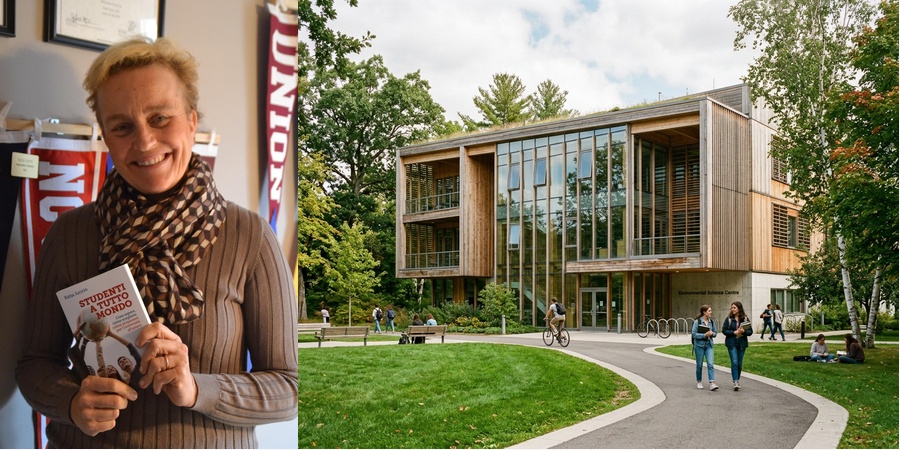
On July 10th, I will be a guest at H-FARM to lead the workshop "Your Path." This is a special session designed for a group of 15 teenagers, aged 16 to 18, who are concluding an intensive week of training, sports, and personal growth. As I finalize the agenda and review the slide deck we'll use throughout the day, I find myself reflecting on a question I hear repeatedly in my office, especially from parents: "What is the right path?" It's a legitimate question, full of expectations and often, a good dose of anxiety. But the truth is, when it comes to the future and university, there isn't just ONE right path...

Summary For years, I have guided Italian students who wished to pursue their university education outside of Italy. This time, however, the perspective has flipped, and this is precisely what made the experience so interesting. Working as the Italy Country Expert for Briteguides, I found myself taking the opposite path: describing Italy, its university system, its opportunities, and even its complexities, to international students, families, and counselors who view my country as a potential study destination. This change in direction has made me reflect on a point I consider central to my work: studying abroad doesn't just mean moving geographically, but entering into a new relationship with the world, with others, and with oneself. In...

Summary The article emphasizes the crucial importance of timing in the university abroad journey, explaining that the right time to start is often sooner than one might think. Planning ideally begins before high school, with "sowing before reaping," focusing on building a solid profile and language skills. The path concretely takes shape in the third year (or equivalent), a time to begin exploring university systems and consider initial guidance counseling. The second-to-last year is defined as the "heart of planning," the year to initiate the full orientation process, define the budget, work on the extracurricular profile, and prepare for standardized tests. Finally, the last year is for applications, with crucial deadlines extending from October to March. The guide also addresses...
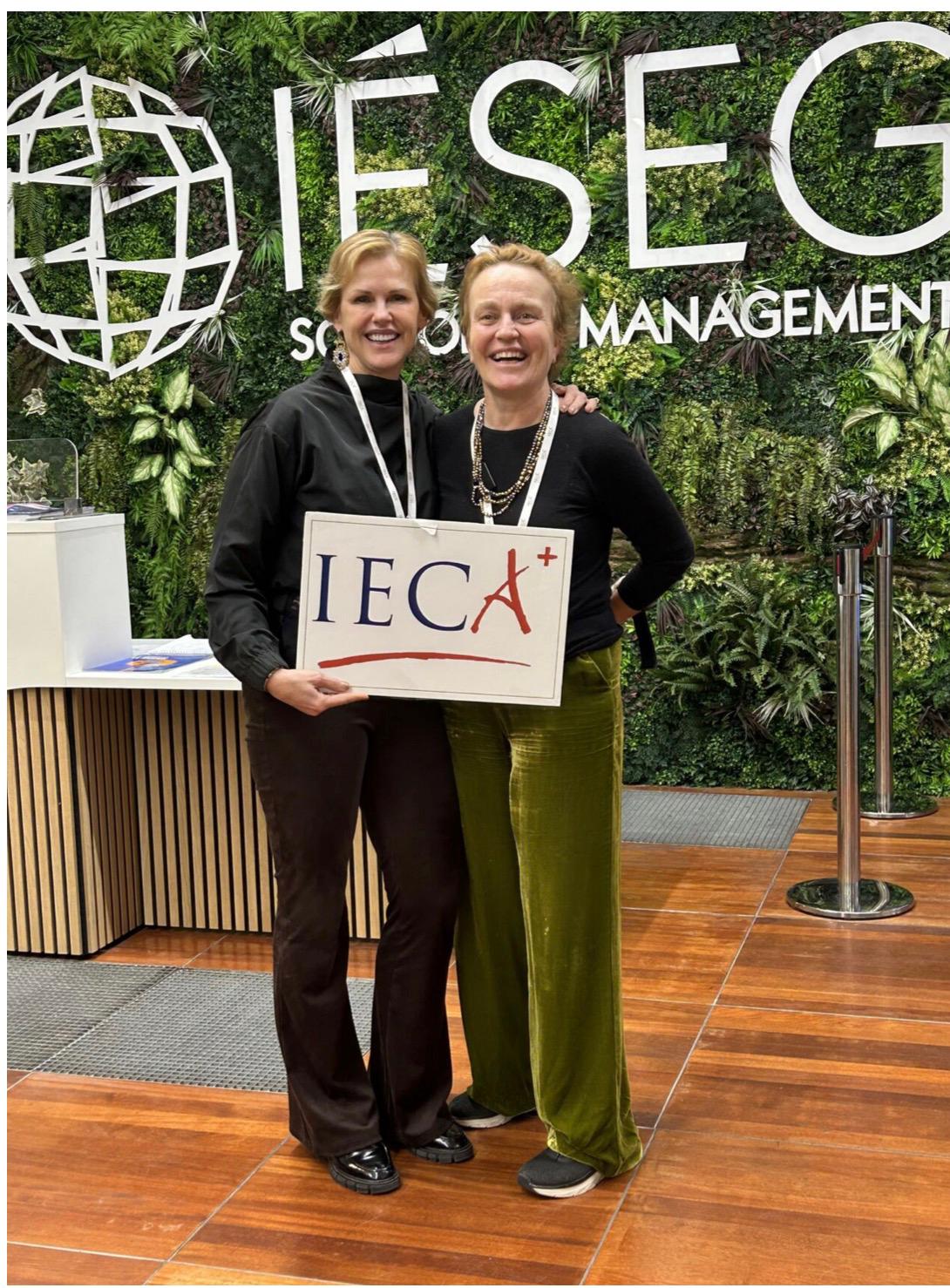
When I unpacked my suitcase upon my return from Paris, I realized that the heaviest luggage was not the one filled with notes and university brochures, but the one loaded with reflections, perspectives, and new awareness. As I told you in my previous article about the reasons for my departure, I had embarked on this journey to the IECA Symposium with a very specific set of questions in my mind. They are the same questions I hear every day in my practice: how will my son find his place in a world dominated by artificial intelligence? Or does it still make sense to make sacrifices for an international education when technology seems to be able to shorten every distance and automate every skill? Today, after two days of intense discussions, panels...

Summary When I talk to students and study abroad families, one question always comes back: how will school, university and work change in the age of artificial intelligence? In 2026, this question has become so central that I decided to help shape the scientific program of the IECA European Regional Symposium in Paris, dedicated to the "Future Learner." In this article I take you behind the scenes of these two days: why I chose to be there, who the Future Learner really is, and how AI can be an ally in study abroad choices. Not a technical account, but a compass for orientation. Why a symposium on the Future Learner (and why now) I well remember the moment I decided that the topic of the Future Learner would not...

Summary Every orientation journey is unique, made up of enthusiasms and second thoughts, fears to be faced and unexpected discoveries. In this article I tell the story of F., a student with an artistic soul who, through a months-long investigation, found her way into psychology in Berlin. A journey that involved not only her, but also her parents, who were called upon to transform anxiety into confidence. F.'s is just one of the many stories I accompany: each student has his or her own path, their own fears, their own revelations. But some dynamics are repeated, and sharing them can be helpful to those who are beginning this journey. When the creative soul meets psychology: a path of orientation through doubts, emotions and choices...

Summary As we prepare to close the doors on 2025, it is the perfect time to look ahead with renewed energy. The new year brings with it new academic programs, new competitions, and new challenges to embrace. In this end-of-year article, we take stock of what it really means to set yourself up for success in 2026-not only with up-to-date information on the best international university pathways, but with the same drive and dedication that has accompanied us so far. There is something symbolic about closing out a year. It is like turning the last page of an important chapter, with the knowledge that the next one is yet to be written. 2025 has been a busy year for so many families I have accompanied. We have explored...

Summary When a family decides to consider an international academic pathway, the question about financial investment and future return is inevitable and necessary. However, limiting the analysis to the first salary or the immediate prestige of the degree risks being a myopic view. In this in-depth analysis, we look at how the out-of-country study experience radically affects career prospects in the medium and long term. It is not just about enriching the resume, but about building a "future-proof" professionalism. We will see how change management, cultural adaptability and acquired method are the real keys to accessing the most ambitious professional opportunities in an ever-changing job market. The legitimate investment doubt: is it worth it? In my...

Summary A journey into the heart of German academic excellence, from Munich to Berlin via Karlsruhe. This is not just a diary of a college tour, but a real immersion into the future of higher education. In this article we take you with us to discover three cities and their universities, each with a unique soul: the pulsating innovation of Munich, the depth of research in Karlsruhe, and the creative energy of Berlin. A journey designed for those who have to choose a university in Germany and are looking for guidance beyond brochures, based on direct experience and a deep understanding of what each campus can offer. Our journey for you: a tour for choosing a university in Germany 1. Our mission: to be...

Summary This article offers a comprehensive guide for students beginning a study abroad journey, emphasizing how building connections is critical to a successful experience. The text takes students through the different stages of their journey, starting with the steps to take before departure, such as using university social media and actively participating in orientation for initial integration. Once at the destination, the article provides concrete tactics for creating a social network, suggesting keeping the dorm door open, forming study groups and joining student clubs. Academically, the guide explains how to navigate the new system, interacting with professors, taking advantage of campus resources, and adapting to a...

Summary As an educational counselor, I emphasize the importance of taking advantage of downtime to find one's college best fit through strategies of self-reflection, active research, and planning. The post explores practical methods for orientation: from creating a "passion journal" to campus visits, from building an academic profile to the supportive role of parents. The goal is to guide students toward an informed choice that goes beyond prestige, prioritizing alignment with their personal and professional aspirations. As an educational counselor who specializes in guiding students toward college pathways abroad, I observe each year the transformative potential of break times to identify one's academic best fit. Although August is drawing to a close, this period can still represent a valuable opportunity...

Every time I prepare a young person for his or her first departure, I find myself reliving the same question: what does it mean, today, to leave home to study across borders? In this post I gather some reflections born from the last chapter of my book and from my daily experience as an educational counselor: an integrated look at the emotions, practical challenges and potential of a path that, despite the uncertainties of the present, remains an extraordinary resource for young people and their families. Studying abroad in the age of global uncertainties Does studying abroad require courage? Certainly, it can be a challenge for kids and families, especially at a time in history fraught with questions for the younger generation. Yet it remains a unique opportunity. A choice of presence, not escape When I started...

In my work as an educational counselor, I dedicate myself with passion and deep responsibility to accompanying students on their college choice journey, visiting universities very often. It is not just a professional task, but a real mission: to help them navigate one of the most significant and transformative moments of their lives. This is an exciting journey, but a delicate one at the same time, as it involves guiding them not only to find their academic path, but to discover their most authentic passions, their hidden talents, and to envision how to turn this into a future full of possibilities, fulfillment and success. I firmly believe that the choice of college is a crucial moment in the life of a...


An international approach is critical to successfully meeting the challenges of the future. (altro…)
Studying abroad is much more than attending a university in another country. (altro…)

One of the first questions students and parents ask is just that: but how much does it cost to study abroad? (altro…)

What to know, how to choose, how to prepare for college abroad. All in a Book! A growing trend that has more than doubled in the last 10 years. A transformation that confirms the mental "quantum leap" that the very young Italians of Generation Z have matured in recent years, conceiving themselves more and more as "citizens of the world." Training abroad is a life-changing choice, an investment in one's future both personally and professionally, a path that opens up new perspectives in an ever-changing world. For these reasons it is a choice that ignites enthusiasm but nevertheless should be pondered with great realism and pragmatism:What is the right college for me? How much does it cost? How can I best prepare myself for admission? Is it from.