EN
EN  IT
IT 

Your Path: Navigating International University Options (Without Getting Overwhelmed)
On July 10th, I will be a guest at H-FARM to lead the workshop “Your Path,” a special session designed for a group of 15 young people aged 16 to 18 who are completing an intense week of training, sports, and personal growth.
As I'm finalizing the agenda and reviewing the slide deck we'll use during the day, I found myself reflecting on a question I hear repeatedly in my practice, especially from parents: “What is the right way?”.
It's a legitimate question, fraught with expectations and, often, a good dose of anxiety. But the truth is, when it comes to the future and university, there isn't ONE single right path. There's only the right path for each of them, the one that in my work I call the best fit.
The goal of the workshop at H-FARM is precisely this: not to give ready-made answers, but to teach young people to read their own personal map, providing them with the right tools to put in their backpack before embarking on their journey.
If you're wondering how to support your child through this crucial decision, or if you want to understand if a structured orientation program This in-depth discussion will cover the philosophy guiding the workshop and practical steps to plan this transition with peace of mind.
The path is not just one: learning to read the map
The international university system offers an extraordinary variety of options. However, this abundance can itself lead to disorientation. To help students organize their thoughts, during the workshop I will present four broad “path types” into which they can see themselves:
Who needs to explore before choosing
This path is ideal for students with multidisciplinary interests who are afraid of closing off future options by choosing a highly specialized field of study at 18. The flexible Anglo-Saxon systems, and in particular the model of Liberal Arts in the United States, they allow students to take different courses during the first two years and declare their major (majoronly later.
This is the path chosen, for example, by M., a student I recently mentored: she was torn between her passion for economics and her passion for film. By choosing an American college, she was able to study both subjects before deciding how to integrate them into her career plan.
2. Those who already know what they want and are looking for direct access
On the opposite end of the spectrum, we find students with extremely clear ideas. If your child already knows they want to become an aerospace engineer or a product designer, the best choice might be a vocational path or direct admission.
University systems in countries such as Germany, Denmark, or the Netherlands offer Universities of Applied Sciences (Universities of Applied Sciences o Colleges) that combine theory with mandatory internships at companies starting in the first year—ideal for those who prefer a hands-on approach and want to dive right into the subject matter.
3. Who flourishes in a small, relational environment
Not all students are cut out for large universities with 30,000 students, where you risk being just a number on a roster. Many students do their best at small colleges, where classes have no more than twenty students and professors know each one by name.
This type of environment fosters mentoring, active participation in discussions, and the development of a strong network of interpersonal relationships. It is a valuable choice that often makes a difference in the academic and personal success of students who are more shy or thoughtful.
4. Those looking for an international experience while staying close to home
Studying in English doesn't necessarily mean moving across the planet. Today, many excellent Italian universities offer degree programs entirely in English. Furthermore, double degree programsdouble degreeuniversities in neighboring European countries represent a fantastic option.
They allow you to acquire a transcultural mindset and study in an international context, while maintaining a geographical and familial safety net.
In my consulting work for study abroad, my task is not to push towards the most prestigious goal, but to help the family identify which of these paths is most consistent with the boy's history and character today.
The Questions That Really Matter
College counseling isn’t just about sorting through college brochures. It is, first and foremost, a process of self-reflection. That’s why, at H-FARM, I’ll guide the students through four fundamental questions that every family should consider:
- Do I want to stay close to home, or am I ready to pack the world into my backpack? Geographical distance brings with it emotional distance and a sense of independence. Not all teenagers are ready to handle the day-to-day responsibilities of running a household or being away from their loved ones at the same age, and it’s important to respect their own pace of maturation.
- Do I need a system that tells me what to do, or one that lets me chart my own course? Some students need a strict study plan, with predetermined exams and clear deadlines, so they don’t waste their energy. Others, on the other hand, feel stifled by a rigid structure and need flexibility to reach their full potential.
- How economically sustainable is the project, really? This is a question that is primarily up to the parents. Understanding How much does it cost to study abroad? It is essential right from the start. Not all international destinations require the same budgets as American colleges: continental Europe offers top-tier public universities with extremely low tuition fees (often lower than those of private Italian universities).
- What do I do if I change my mind after a year? The fear of making a mistake can paralyze young people. Knowing that there are flexible systems in place—where switching from one course to another is both expected and facilitated—eases the pressure and allows them to make choices with greater peace of mind and courage.
What to Pack in Your Backpack: Hardware vs. Software
To undertake a mountain expedition, the correct equipment is necessary. On the path towards university abroad, this equipment is divided into two main categories: Hardware and Software.
Hardware (Mandatory Technical Requirements)
Without these elements, the application cannot be considered by universities. They must be prepared well in advance:
- Language certifications: English (IELTS, TOEFL, or Cambridge) is the key to accessing almost all international courses. It is important to remember that while Cambridge does not have a formal expiration date, IELTS and TOEFL are valid for two years, an option that is more flexible. Choosing the right time to take the exam avoids having an expired certificate at the time of application.
- The academic CV: It should be concise (maximum 1-2 pages) and focused on facts. There's no need to include personal opinions, but rather to precisely describe the activities carried out, the roles held, and especially the skills acquired.
- Transcripts European universities usually require grades from the last three years of high school, while the American and Canadian systems evaluate the entire preceding four years. An official certified translation is often required.
- The Personal Statement or Motivation Letter: These are documents where the student makes their voice heard. Universities don't want to read a CV summary, they want to understand how do you think the candidate, what are their deep motivations and why did they choose that path. Authenticity is everything here: recruiters can sniff out texts written by artificial intelligence or by parents from miles away; it's a valuable opportunity to introduce yourself and make yourself known.
Software (the experiences that make you unique)
Hardware helps you overcome bureaucratic hurdles, but it's the software that convinces the university to choose you from thousands of candidates:
- University or pre-college summer school: Attending a summer program on a campus at 16 or 17 is the best way to test the waters and see if university life abroad is for you.
- Online Courses (MOOCs) Platforms like Coursera or edX offer free courses taught by the best universities in the world. Taking one demonstrates intellectual curiosity and the ability to study complex topics in English.
- Study abroad experiences during high school: A quarter, a semester, or an entire year spent attending a foreign school develops extraordinary autonomy and mental flexibility.
- Volunteering and personal projects: Engaging in a social activity or starting your own project (a blog, a small educational channel, an organized sports activity) shows determination and a sense of responsibility.
To the kids I'll meet at H-FARM, I'll give them unconventional advice: Don't try to do everything. Accumulating dozens of certificates without a common thread makes your profile confusing. It's much better to choose a single activity for this summer, but approach it with genuine engagement and curiosity.
International Orientation FAQ
Is my son in his junior year of high school, are we late in starting to plan?
No, you are perfectly on time, but the second-to-last year is the most important part of the entire journey. It is during these months that the College List is built, language tests are planned, and work begins on drafting the motivational essays, before the academic pressure of the final year becomes too much.
Do standardized tests like the SAT or ACT still matter in 2026?
Many American universities maintain a policy test-optional, which means the SAT or ACT are not mandatory. However, a great score on these tests can still make a difference for admission to more selective universities or for obtaining merit-based scholarships. The choice to take them should be evaluated on a case-by-case basis: it can often be convenient because the same test can be sent to multiple universities that require it.
How do professor recommendation letters work?
Especially in the American and British systems, letters of recommendation written by high school teachers carry significant weight. It is crucial to request these letters from professors who know the student well, not only in terms of grades but also their class participation and character, and to do so well in advance (ideally before the end of the penultimate year).
What happens if my child isn't admitted to their first choice?
Having a solid “Plan B” is not a fallback, but an integral and strategic part of planning. In the British system, for example, there is the process of Clearing summer to reassign deserving students to still available spots. Building a balanced college list, which includes universities with different admission requirements, protects against unpleasant surprises and always guarantees a viable path.
The first step of the hike
You don't have to have all the answers today. University orientation isn't a single event, but a process of discovery that takes time, trial, and error, and even some second thoughts.
The most people satisfied Those I have accompanied in these years as an educational counselor are not the ones who blindly chased the most prestigious name or the seemingly easiest choice, but those who had the patience to find a destination that truly reflected their identity.
If you want to start charting the map for your child's future, I invite you to read my page. Who I am to better understand my working method, or to consult the list of universities I have visited to discover the realities I know firsthand.
If you recognize yourself in the challenges and questions of this article and wish for personalized support to build this journey, Contact me directly To talk about it together.

Recent Posts

Summary Studying in the United States today costs between $80,000 and $90,000 per year, whereas in Europe many public universities C In this guide, I compare the American university model with the European one across three concrete fronts: real costs, bureaucratic visa protections, and long-term ROI. You will also find practical advice for planning family budgets and answers to the most frequent questions from parents and students. In my office, between students' dreams and families' choices In my work as an educational counselor, I meet parents and young people every day grappling with one of the most important decisions of their lives: choosing a university. Some arrive with clear ideas already, while others show up...

Summary In this guide, we will explore how to transform the summer months into a strategic resource for applying to universities abroad. We will analyze: How to build a competitive profile ('Career Capital') without resorting to formal internships. How to select target countries critically among the Netherlands, Germany, the United Kingdom, and Ireland. The technical management of application portals (UCAS, CAO, Studielink, Uni-assist). A clear month-by-month roadmap from July to September. Every year, around September, I receive dozens of calls that almost always begin the same way: "We discovered all the deadlines for applying to universities abroad too late." During the summer, while school is out, time seems to stretch, and the idea of thinking about university feels distant. Then September arrives: the...
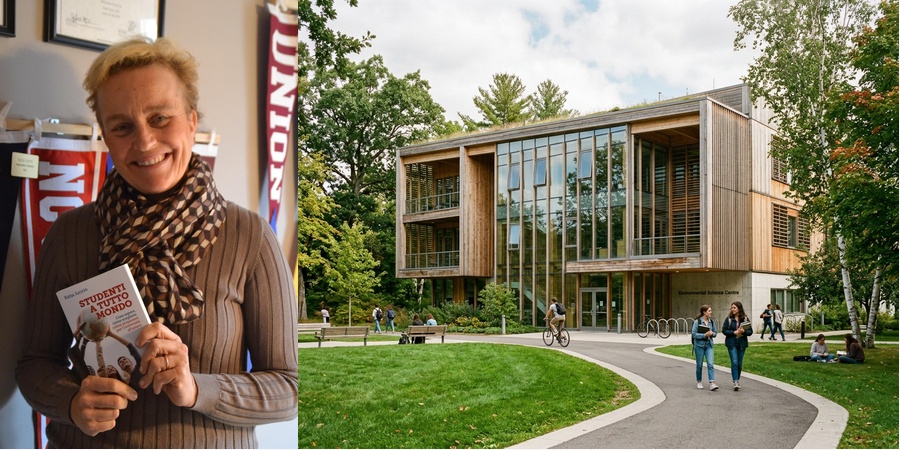
On July 10th, I will be a guest at H-FARM to lead the workshop "Your Path." This is a special session designed for a group of 15 teenagers, aged 16 to 18, who are concluding an intensive week of training, sports, and personal growth. As I finalize the agenda and review the slide deck we'll use throughout the day, I find myself reflecting on a question I hear repeatedly in my office, especially from parents: "What is the right path?" It's a legitimate question, full of expectations and often, a good dose of anxiety. But the truth is, when it comes to the future and university, there isn't just ONE right path...
Summary For years, I have guided Italian students who wished to pursue their university education outside of Italy. This time, however, the perspective has flipped, and this is precisely what made the experience so interesting. Working as the Italy Country Expert for Briteguides, I found myself taking the opposite path: describing Italy, its university system, its opportunities, and even its complexities, to international students, families, and counselors who view my country as a potential study destination. This change in direction has made me reflect on a point I consider central to my work: studying abroad doesn't just mean moving geographically, but entering into a new relationship with the world, with others, and with oneself. In...

Summary The article emphasizes the crucial importance of timing in the university abroad journey, explaining that the right time to start is often sooner than one might think. Planning ideally begins before high school, with "sowing before reaping," focusing on building a solid profile and language skills. The path concretely takes shape in the third year (or equivalent), a time to begin exploring university systems and consider initial guidance counseling. The second-to-last year is defined as the "heart of planning," the year to initiate the full orientation process, define the budget, work on the extracurricular profile, and prepare for standardized tests. Finally, the last year is for applications, with crucial deadlines extending from October to March. The guide also addresses...
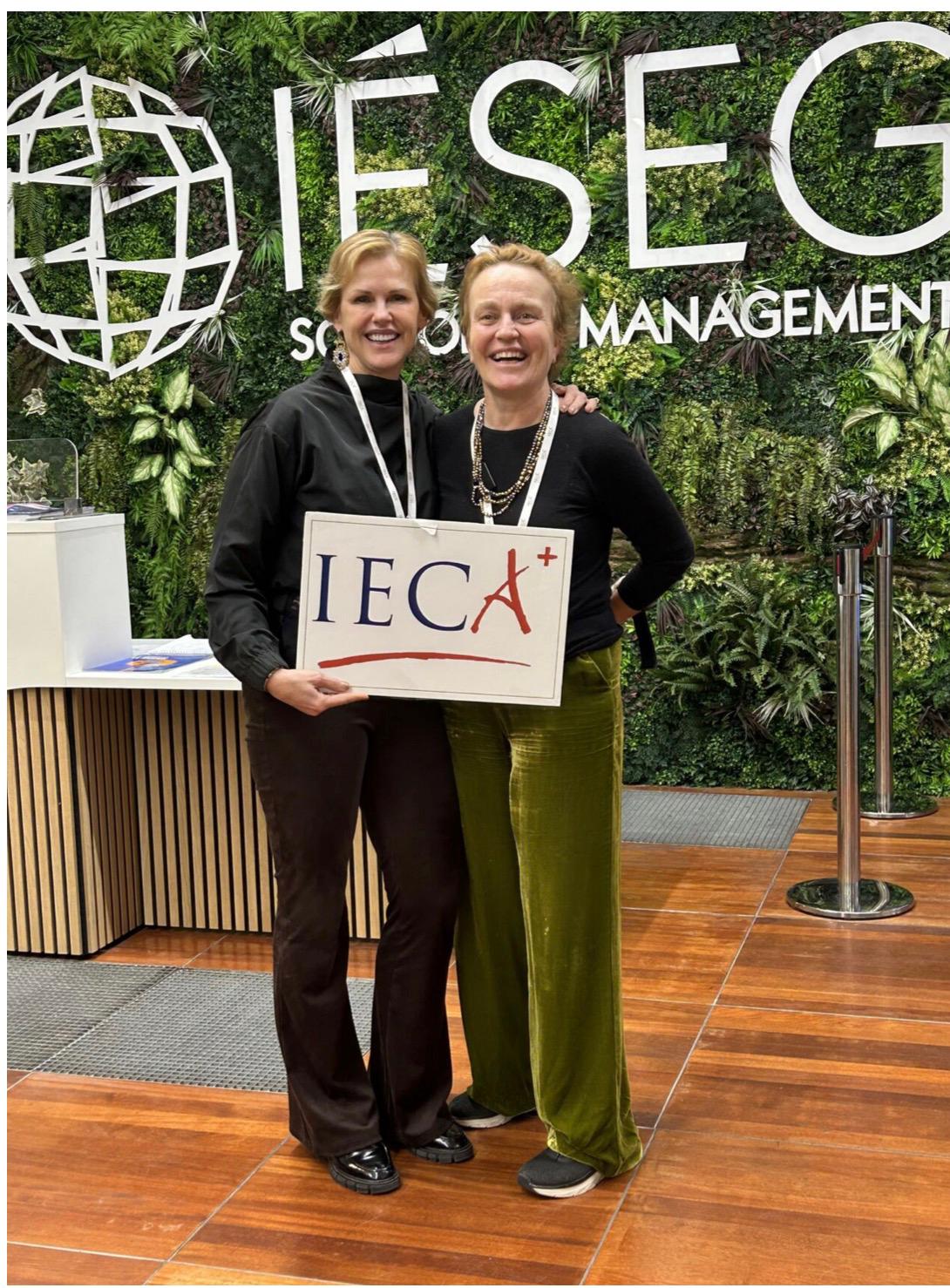
When I unpacked my suitcase upon my return from Paris, I realized that the heaviest luggage was not the one filled with notes and university brochures, but the one loaded with reflections, perspectives, and new awareness. As I told you in my previous article about the reasons for my departure, I had embarked on this journey to the IECA Symposium with a very specific set of questions in my mind. They are the same questions I hear every day in my practice: how will my son find his place in a world dominated by artificial intelligence? Or does it still make sense to make sacrifices for an international education when technology seems to be able to shorten every distance and automate every skill? Today, after two days of intense discussions, panels...

Summary When I talk to students and study abroad families, one question always comes back: how will school, university and work change in the age of artificial intelligence? In 2026, this question has become so central that I decided to help shape the scientific program of the IECA European Regional Symposium in Paris, dedicated to the "Future Learner." In this article I take you behind the scenes of these two days: why I chose to be there, who the Future Learner really is, and how AI can be an ally in study abroad choices. Not a technical account, but a compass for orientation. Why a symposium on the Future Learner (and why now) I well remember the moment I decided that the topic of the Future Learner would not...

Summary Every orientation journey is unique, made up of enthusiasms and second thoughts, fears to be faced and unexpected discoveries. In this article I tell the story of F., a student with an artistic soul who, through a months-long investigation, found her way into psychology in Berlin. A journey that involved not only her, but also her parents, who were called upon to transform anxiety into confidence. F.'s is just one of the many stories I accompany: each student has his or her own path, their own fears, their own revelations. But some dynamics are repeated, and sharing them can be helpful to those who are beginning this journey. When the creative soul meets psychology: a path of orientation through doubts, emotions and choices...

Summary As we prepare to close the doors on 2025, it is the perfect time to look ahead with renewed energy. The new year brings with it new academic programs, new competitions, and new challenges to embrace. In this end-of-year article, we take stock of what it really means to set yourself up for success in 2026-not only with up-to-date information on the best international university pathways, but with the same drive and dedication that has accompanied us so far. There is something symbolic about closing out a year. It is like turning the last page of an important chapter, with the knowledge that the next one is yet to be written. 2025 has been a busy year for so many families I have accompanied. We have explored...

Summary When a family decides to consider an international academic pathway, the question about financial investment and future return is inevitable and necessary. However, limiting the analysis to the first salary or the immediate prestige of the degree risks being a myopic view. In this in-depth analysis, we look at how the out-of-country study experience radically affects career prospects in the medium and long term. It is not just about enriching the resume, but about building a "future-proof" professionalism. We will see how change management, cultural adaptability and acquired method are the real keys to accessing the most ambitious professional opportunities in an ever-changing job market. The legitimate investment doubt: is it worth it? In my...

Summary A journey into the heart of German academic excellence, from Munich to Berlin via Karlsruhe. This is not just a diary of a college tour, but a real immersion into the future of higher education. In this article we take you with us to discover three cities and their universities, each with a unique soul: the pulsating innovation of Munich, the depth of research in Karlsruhe, and the creative energy of Berlin. A journey designed for those who have to choose a university in Germany and are looking for guidance beyond brochures, based on direct experience and a deep understanding of what each campus can offer. Our journey for you: a tour for choosing a university in Germany 1. Our mission: to be...

Summary This article offers a comprehensive guide for students beginning a study abroad journey, emphasizing how building connections is critical to a successful experience. The text takes students through the different stages of their journey, starting with the steps to take before departure, such as using university social media and actively participating in orientation for initial integration. Once at the destination, the article provides concrete tactics for creating a social network, suggesting keeping the dorm door open, forming study groups and joining student clubs. Academically, the guide explains how to navigate the new system, interacting with professors, taking advantage of campus resources, and adapting to a...

Summary As an educational counselor, I emphasize the importance of taking advantage of downtime to find one's college best fit through strategies of self-reflection, active research, and planning. The post explores practical methods for orientation: from creating a "passion journal" to campus visits, from building an academic profile to the supportive role of parents. The goal is to guide students toward an informed choice that goes beyond prestige, prioritizing alignment with their personal and professional aspirations. As an educational counselor who specializes in guiding students toward college pathways abroad, I observe each year the transformative potential of break times to identify one's academic best fit. Although August is drawing to a close, this period can still represent a valuable opportunity...

Every time I prepare a young person for his or her first departure, I find myself reliving the same question: what does it mean, today, to leave home to study across borders? In this post I gather some reflections born from the last chapter of my book and from my daily experience as an educational counselor: an integrated look at the emotions, practical challenges and potential of a path that, despite the uncertainties of the present, remains an extraordinary resource for young people and their families. Studying abroad in the age of global uncertainties Does studying abroad require courage? Certainly, it can be a challenge for kids and families, especially at a time in history fraught with questions for the younger generation. Yet it remains a unique opportunity. A choice of presence, not escape When I started...

In my work as an educational counselor, I dedicate myself with passion and deep responsibility to accompanying students on their college choice journey, visiting universities very often. It is not just a professional task, but a real mission: to help them navigate one of the most significant and transformative moments of their lives. This is an exciting journey, but a delicate one at the same time, as it involves guiding them not only to find their academic path, but to discover their most authentic passions, their hidden talents, and to envision how to turn this into a future full of possibilities, fulfillment and success. I firmly believe that the choice of college is a crucial moment in the life of a...


An international approach is critical to successfully meeting the challenges of the future. (altro…)
Studying abroad is much more than attending a university in another country. (altro…)

One of the first questions students and parents ask is just that: but how much does it cost to study abroad? (altro…)

What to know, how to choose, how to prepare for college abroad. All in a Book! A growing trend that has more than doubled in the last 10 years. A transformation that confirms the mental "quantum leap" that the very young Italians of Generation Z have matured in recent years, conceiving themselves more and more as "citizens of the world." Training abroad is a life-changing choice, an investment in one's future both personally and professionally, a path that opens up new perspectives in an ever-changing world. For these reasons it is a choice that ignites enthusiasm but nevertheless should be pondered with great realism and pragmatism:What is the right college for me? How much does it cost? How can I best prepare myself for admission? Is it from.