EN
EN  IT
IT 

When the Journey Reverses: Telling Italy to Those Who Dream of Studying Far from Home
Summary
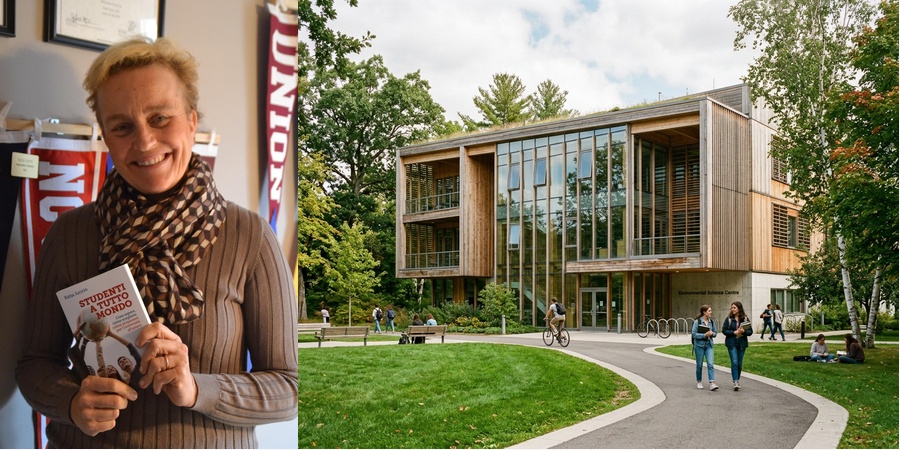
For years, I've accompanied Italian students who wished to pursue their university studies outside of Italy. This time, however, the perspective reversed, and it was precisely this that made the experience so interesting. Working as Italy Country Expert for Briteguides, I found myself doing the reverse journey: telling about Italy, its university system, its opportunities, and also its complexities, to international students, families, and counselors who are looking at my country as a possible study destination.
This change of direction made me reflect on a point that I consider central to my work: studying abroad doesn't just mean moving geographically, but entering into a new relationship with the world, with others, and with oneself. In this sense, talking about Italy to those who live elsewhere was not just an informative exercise, but also a way to question myself about the profound value of educational exchange, about the meaning of internationalization, and about what a study experience, in Italy or elsewhere, can truly leave in a person's life.
From departing to welcoming
For a long time, in my guidance work for study abroad, I have mostly seen an outflow. Italian students looking to the United States, the United Kingdom, Canada, or other European countries as places to find training more suited to their aspirations, or simply a context in which to measure themselves against the world in a new way.
It's a movement I know well and continue to follow every day, through tailor-made paths, where I try to help students and families understand not only where to go, but why, with what goals, and with what tools. Precisely for this reason, being asked to contribute to an international guide on Italy seemed, right from the start, something symbolically very strong: for once it wasn't about explaining how to leave, but about explaining why come.
And I must say that this perspective reversal I liked it very much. There's also a small ironic element, if you will: after years spent explaining to Italian students how to navigate portals, application systems, and procedures from other countries, I found myself doing the opposite, that is, explaining to foreign students how to orient themselves within our pathways, our portals, our calls for applications, and our logic. However, in the end, the core of the work has remained identical: translating complexity, building bridges, helping people better understand where they are going.
Why Studying Abroad Really Matters
When talking about studying abroad, we still too often tend to reduce everything to a matter of prestige, the English language, or professional opportunities. These are indeed real and important aspects, but they don't encompass the full meaning of the experience. Studying in another country means, first and foremost, changing your perspective on the world. It means stepping out of what is familiar, suspending your habits, and discovering that many of the things we took for granted—in relationships, in school, in communication—are actually just one of many existing possibilities.
From an educational perspective, this passage is extraordinarily fruitful. Universities are not just places where information is accumulated or credits are obtained, but spaces where identities, relationships, and visions of the future are built. When this experience takes place in an international context, learning inevitably broadens: it's no longer just about the content of a course, but about the daily encounter with other ways of speaking, reasoning, disagreeing, collaborating, and imagining adult life.
In my work method, This aspect is always central. I never consider the choice of a country or university solely in terms of rankings, reputation, or job prospects. The most interesting, and also the most difficult, question is always another: who will you become living and studying in that context?
The Transcultural Mind, Between Education and Complexity
This idea of transcultural mind it reminds us that learning is not just accumulating knowledge, but changing the way we look at what surrounds us. In a time of easy answers and mental blocks, studying abroad trains us to manage uncertainty and confront differences.
Those who study in another country almost always learn to live with a certain amount of disorientation. They have to interpret new codes, understand how relationships work, and adapt to unwritten rules that no one has explicitly taught them. It's a process that can be tiring, certainly, but it's also one of the most effective ways to develop independence, mental flexibility, and the ability to see reality from multiple perspectives.
For this reason, I consider international experience, both outgoing and incoming, to be more than just an academic step. It is a form of education in complexity, training in holding together different identities, divergent expectations, and different languages. And if this is true for Italian students who go abroad, it is equally true for international students who choose to come to Italy.
If you're just starting out and have practical doubts, you can consult my guide “How to Study Abroad: A Useful Guide”, where I explain the first steps to take. I discuss it in even more detail in my book, a tool designed for those who want a clear roadmap.
Telling Italy to those who look at it from the outside
And this is where the work done with Briteguides comes in. In contributing to the Italy Quick Reference Guide, I tried to tell the story of Italy not as a postcard, but as a Royal University System, rich in opportunities and at the same time complex, with rules to be understood, deadlines to be respected, and choices to be made consciously.
One of the central messages of the guide is that Italy is not just one of the Most affordable study destinations in Europe, but also one of the richest in terms of academic, cultural diversity, and overall experience. Italian public universities, for example, apply income-based taxes and they don't automatically differentiate between Italian and international students like in many other systems, an element that makes the country interesting for many families. Added to this is the presence of over 90 public and private universities, centers of excellence, courses in Italian, and international programs in English, all within a system fully integrated into the European Higher Education Area.
Precisely because Italy is a fascinating destination, it's important not to oversimplify it. Those looking at our country from abroad must know that there isn't a single centralized application system, that procedures vary from university to university, and that for non-European students, Universitaly, the government portal for pre-enrollment, also comes into play. For this reason too, a clear guide can make a difference: it helps transform a generic fascination for Italy into a reasoned and practical choice.
Putting emotions, information, and expectations in order is often a first step. I've also shared some practical tools for doing so in “Building connections for a study abroad pathway”, where I talk about passion journals, campus visits, and concrete ways to approach this choice more consciously.
Italy as an experience, not just a destination
There’s another aspect that’s very important to me. Studying in Italy doesn’t just mean enrolling in a degree program at a certain university. It means experiencing’Training experience in a country where study is continuously intertwined with urban space, with the cultural heritage, with language, with the way of being together.
Italian universities, with a few exceptions, are not designed as separate campuses. They are often immersed in the urban fabric, in historic centers, in transportation networks, in neighborhoods, and in daily life. This naturally presents challenges, but it also offers a very unique kind of experience, where learning is not limited to the classroom and extends to real life, relationships, the rhythms of the city, and regional differences.
For many international students, this comes as a surprise. They expect the Italy of beauty, art, and cuisine, and they certainly find it. But they also discover a complex system, a distributed university life, and a way of learning that engages with the city, the language, informal networks, and opportunities for daily interaction. It is precisely this stratification, in my opinion, that makes Italy such an interesting educational destination for those seeking not just a degree, but a full experience.
An idea that also runs through the project of my book “Students to the Whole World!”born from observing how students and families transform when they begin to view the world as a possible space for study and life.
A reversal that says something about the present
There is something very current, and ultimately encouraging, in the fact that today the student movement is no longer just one-way. For many years in Italy, we primarily looked at those who were leaving. Today, more and more often, we can also look at those who are arriving. This does not erase the problems of our university system, which exist and must be addressed, but it indicates that Italy can be an active participant in a Richer and more mature international educational exchange.
It seems like an important step from a cultural point of view as well. Welcoming international students isn't just about increasing numbers or “internationalizing” an educational offering. It means rethinking universities as places where different perspectives meet, where we too, as a system and as a country, learn something from those who arrive. International education in Italy is growing and becoming an increasingly attractive high-quality option, especially for students coming from overseas.
From this perspective, working as the Italy Country Expert for Briteguides has been much more than professional recognition for me. It has been a way to give voice, in an international context, to the idea that the best education always arises from the encounter between differences, from mutual curiosity, and from the ability to read the world in a non-simplified way.
The meaning of my work, today
Ultimately, whether I am accompanying an Italian student abroad or helping someone from the other side of the world come to Italy, the goal is the same. I work with both young people aiming to go abroad and international students who contact me to understand how to enter the Italian or European university system.
In my personalized orientation paths, I work precisely on this: building choices that are sustainable, realistic, ambitious enough, and consistent with each student's story. There is no absolute perfect country, and there is no perfect university for everyone. Rather, there is dialogue between desires, abilities, family context, financial resources, personal maturity, and life project.
Those who are curious to delve deeper into these topics can find many of these threads in other articles from blog, for example in the post “How to study abroad: everything you need to know" where I discuss useful tools and steps for turning ideas into concrete actions.
If you recognize yourselves (students and families) in some of the questions that run through these lines and are thinking about a university path in Italy or abroad, on the Services page I explain how I work. I invite you to contact me to build a personalized study plan together.

Recent Posts

Summary Studying in the United States today costs between $80,000 and $90,000 per year, whereas in Europe many public universities C In this guide, I compare the American university model with the European one across three concrete fronts: real costs, bureaucratic visa protections, and long-term ROI. You will also find practical advice for planning family budgets and answers to the most frequent questions from parents and students. In my office, between students' dreams and families' choices In my work as an educational counselor, I meet parents and young people every day grappling with one of the most important decisions of their lives: choosing a university. Some arrive with clear ideas already, while others show up...

Summary In this guide, we will explore how to transform the summer months into a strategic resource for applying to universities abroad. We will analyze: How to build a competitive profile ('Career Capital') without resorting to formal internships. How to select target countries critically among the Netherlands, Germany, the United Kingdom, and Ireland. The technical management of application portals (UCAS, CAO, Studielink, Uni-assist). A clear month-by-month roadmap from July to September. Every year, around September, I receive dozens of calls that almost always begin the same way: "We discovered all the deadlines for applying to universities abroad too late." During the summer, while school is out, time seems to stretch, and the idea of thinking about university feels distant. Then September arrives: the...
On July 10th, I will be a guest at H-FARM to lead the workshop "Your Path." This is a special session designed for a group of 15 teenagers, aged 16 to 18, who are concluding an intensive week of training, sports, and personal growth. As I finalize the agenda and review the slide deck we'll use throughout the day, I find myself reflecting on a question I hear repeatedly in my office, especially from parents: "What is the right path?" It's a legitimate question, full of expectations and often, a good dose of anxiety. But the truth is, when it comes to the future and university, there isn't just ONE right path...
Summary For years, I have guided Italian students who wished to pursue their university education outside of Italy. This time, however, the perspective has flipped, and this is precisely what made the experience so interesting. Working as the Italy Country Expert for Briteguides, I found myself taking the opposite path: describing Italy, its university system, its opportunities, and even its complexities, to international students, families, and counselors who view my country as a potential study destination. This change in direction has made me reflect on a point I consider central to my work: studying abroad doesn't just mean moving geographically, but entering into a new relationship with the world, with others, and with oneself. In...
Summary The article emphasizes the crucial importance of timing in the university abroad journey, explaining that the right time to start is often sooner than one might think. Planning ideally begins before high school, with "sowing before reaping," focusing on building a solid profile and language skills. The path concretely takes shape in the third year (or equivalent), a time to begin exploring university systems and consider initial guidance counseling. The second-to-last year is defined as the "heart of planning," the year to initiate the full orientation process, define the budget, work on the extracurricular profile, and prepare for standardized tests. Finally, the last year is for applications, with crucial deadlines extending from October to March. The guide also addresses...
When I unpacked my suitcase upon my return from Paris, I realized that the heaviest luggage was not the one filled with notes and university brochures, but the one loaded with reflections, perspectives, and new awareness. As I told you in my previous article about the reasons for my departure, I had embarked on this journey to the IECA Symposium with a very specific set of questions in my mind. They are the same questions I hear every day in my practice: how will my son find his place in a world dominated by artificial intelligence? Or does it still make sense to make sacrifices for an international education when technology seems to be able to shorten every distance and automate every skill? Today, after two days of intense discussions, panels...

Summary When I talk to students and study abroad families, one question always comes back: how will school, university and work change in the age of artificial intelligence? In 2026, this question has become so central that I decided to help shape the scientific program of the IECA European Regional Symposium in Paris, dedicated to the "Future Learner." In this article I take you behind the scenes of these two days: why I chose to be there, who the Future Learner really is, and how AI can be an ally in study abroad choices. Not a technical account, but a compass for orientation. Why a symposium on the Future Learner (and why now) I well remember the moment I decided that the topic of the Future Learner would not...

Summary Every orientation journey is unique, made up of enthusiasms and second thoughts, fears to be faced and unexpected discoveries. In this article I tell the story of F., a student with an artistic soul who, through a months-long investigation, found her way into psychology in Berlin. A journey that involved not only her, but also her parents, who were called upon to transform anxiety into confidence. F.'s is just one of the many stories I accompany: each student has his or her own path, their own fears, their own revelations. But some dynamics are repeated, and sharing them can be helpful to those who are beginning this journey. When the creative soul meets psychology: a path of orientation through doubts, emotions and choices...

Summary As we prepare to close the doors on 2025, it is the perfect time to look ahead with renewed energy. The new year brings with it new academic programs, new competitions, and new challenges to embrace. In this end-of-year article, we take stock of what it really means to set yourself up for success in 2026-not only with up-to-date information on the best international university pathways, but with the same drive and dedication that has accompanied us so far. There is something symbolic about closing out a year. It is like turning the last page of an important chapter, with the knowledge that the next one is yet to be written. 2025 has been a busy year for so many families I have accompanied. We have explored...

Summary When a family decides to consider an international academic pathway, the question about financial investment and future return is inevitable and necessary. However, limiting the analysis to the first salary or the immediate prestige of the degree risks being a myopic view. In this in-depth analysis, we look at how the out-of-country study experience radically affects career prospects in the medium and long term. It is not just about enriching the resume, but about building a "future-proof" professionalism. We will see how change management, cultural adaptability and acquired method are the real keys to accessing the most ambitious professional opportunities in an ever-changing job market. The legitimate investment doubt: is it worth it? In my...

Summary A journey into the heart of German academic excellence, from Munich to Berlin via Karlsruhe. This is not just a diary of a college tour, but a real immersion into the future of higher education. In this article we take you with us to discover three cities and their universities, each with a unique soul: the pulsating innovation of Munich, the depth of research in Karlsruhe, and the creative energy of Berlin. A journey designed for those who have to choose a university in Germany and are looking for guidance beyond brochures, based on direct experience and a deep understanding of what each campus can offer. Our journey for you: a tour for choosing a university in Germany 1. Our mission: to be...

Summary This article offers a comprehensive guide for students beginning a study abroad journey, emphasizing how building connections is critical to a successful experience. The text takes students through the different stages of their journey, starting with the steps to take before departure, such as using university social media and actively participating in orientation for initial integration. Once at the destination, the article provides concrete tactics for creating a social network, suggesting keeping the dorm door open, forming study groups and joining student clubs. Academically, the guide explains how to navigate the new system, interacting with professors, taking advantage of campus resources, and adapting to a...

Summary As an educational counselor, I emphasize the importance of taking advantage of downtime to find one's college best fit through strategies of self-reflection, active research, and planning. The post explores practical methods for orientation: from creating a "passion journal" to campus visits, from building an academic profile to the supportive role of parents. The goal is to guide students toward an informed choice that goes beyond prestige, prioritizing alignment with their personal and professional aspirations. As an educational counselor who specializes in guiding students toward college pathways abroad, I observe each year the transformative potential of break times to identify one's academic best fit. Although August is drawing to a close, this period can still represent a valuable opportunity...

Every time I prepare a young person for his or her first departure, I find myself reliving the same question: what does it mean, today, to leave home to study across borders? In this post I gather some reflections born from the last chapter of my book and from my daily experience as an educational counselor: an integrated look at the emotions, practical challenges and potential of a path that, despite the uncertainties of the present, remains an extraordinary resource for young people and their families. Studying abroad in the age of global uncertainties Does studying abroad require courage? Certainly, it can be a challenge for kids and families, especially at a time in history fraught with questions for the younger generation. Yet it remains a unique opportunity. A choice of presence, not escape When I started...

In my work as an educational counselor, I dedicate myself with passion and deep responsibility to accompanying students on their college choice journey, visiting universities very often. It is not just a professional task, but a real mission: to help them navigate one of the most significant and transformative moments of their lives. This is an exciting journey, but a delicate one at the same time, as it involves guiding them not only to find their academic path, but to discover their most authentic passions, their hidden talents, and to envision how to turn this into a future full of possibilities, fulfillment and success. I firmly believe that the choice of college is a crucial moment in the life of a...


An international approach is critical to successfully meeting the challenges of the future. (altro…)
Studying abroad is much more than attending a university in another country. (altro…)

One of the first questions students and parents ask is just that: but how much does it cost to study abroad? (altro…)

What to know, how to choose, how to prepare for college abroad. All in a Book! A growing trend that has more than doubled in the last 10 years. A transformation that confirms the mental "quantum leap" that the very young Italians of Generation Z have matured in recent years, conceiving themselves more and more as "citizens of the world." Training abroad is a life-changing choice, an investment in one's future both personally and professionally, a path that opens up new perspectives in an ever-changing world. For these reasons it is a choice that ignites enthusiasm but nevertheless should be pondered with great realism and pragmatism:What is the right college for me? How much does it cost? How can I best prepare myself for admission? Is it from.