
 EN
EN  IT
IT 

Studiare in Olanda in inglese: Studielink, selezione Numerus Fixus e la sfida dell’housing
Summary
In questa guida vi accompagno nella stagione delle candidature per le università olandesi 2027/2028. Vedremo:
- Perché il 1° ottobre, giorno in cui apre StudyLink, è la vera partenza per le famiglie più organizzate.
- Cos’è il Numerus Fixus e perché la scadenza del 15 gennaio non ammette eccezioni.
- La differenza tra Research Universities (WO) e Universities of Applied Sciences (HBO), e come scegliere.
- A che punto è il dibattito politico sui corsi in inglese (e perché oggi c’è motivo di essere ottimisti).
- Come affrontare la vera sfida olandese: trovare un alloggio.
- A tabella di marcia mese per mese e le risposte alle domande più frequenti.
Ottobre, il mese in cui si apre la porta olandese
Ogni anno, ai primi di ottobre, c’è una data che segno sul calendario: l’apertura di StudyLink, il portale nazionale attraverso cui passano tutte le candidature alle università olandesi. Per molte famiglie è una data che passa inosservata. Per quelle più organizzate, invece, è il vero punto di partenza: da quel momento si possono aprire le domande per l’anno accademico successivo.
L’Olanda resta per me uno dei Paesi più interessanti per chi sogna un’esperienza universitaria all’estero. È profondamente internazionale, offre un’enorme varietà di corsi di laurea in lingua inglese, ha una didattica pratica e orientata al lavoro di gruppo e costi di iscrizione molto più accessibili rispetto al mondo anglosassone (se state facendo i conti, vi consiglio la mia guida al confronto dei costi tra USA ed Europa).
Ma l’Olanda ha anche regole precise, scadenze rigide e una sfida logistica che sorprende molti genitori. Proviamo a mettere ordine.
Cos’è Studielink e come funziona
Studielink è il sistema centrale di registrazione dell’istruzione superiore olandese. Ci si crea un unico account e da lì ci si iscrive ai corsi di laurea scelti, in qualsiasi università del Paese.
Il punto che spiego sempre alle famiglie è questo: Studielink è solo il primo passo. Dopo la registrazione, ogni università invia (di solito entro poche ore o pochi giorni) le credenziali per il proprio portale interno, dove vanno caricati documenti, pagelle, certificati di lingua e, per alcuni corsi, lettere motivazionali o test. Molti ragazzi si fermano a Studielink convinti di aver finito, e scoprono troppo tardi che la candidatura vera doveva essere completata altrove. Controllate sempre anche la cartella spam.
Qualche regola utile da sapere:
- Si possono inserire fino a quattro corsi di laurea contemporaneamente.
- Di questi, al massimo due possono essere a Numerus Fixus (per alcuni corsi di area medica, come Medicina o Odontoiatria, il limite è uno).
- La candidatura su Studielink non vincola: si può ritirare senza costi, ma attenzione a non farlo per errore su un corso a numero chiuso, perché si perde il posto in graduatoria.
Se state iniziando ora a organizzare il percorso, trovate un quadro più generale su portali e scadenze europee (UCAS, CAO, Uni-assist) nella mia guida strategica alla candidatura universitaria all’estero.
Numerus Fixus: la scadenza del 15 gennaio non si sposta
The Numerus Fixus è il numero chiuso olandese: un tetto massimo di posti fissato per i corsi più richiesti. Oggi riguarda molti dei programmi più ambiti dagli studenti italiani, dalle aree di Economia e International Business fino a Psicologia, oltre a Medicina e ai corsi sanitari.
La regola è semplice e non negoziabile: per i corsi a Numerus Fixus la registrazione su Studielink va completata entro il 15 gennaio alle 23:59 (ora dell’Europa centrale). Non esistono proroghe. Un giorno di ritardo significa perdere un anno.
Come funziona la selezione:
- Entro il 15 gennaio: registrazione su Studielink e, subito dopo, avvio della procedura sul portale dell’università (alcuni atenei fissano scadenze successive per i documenti, per esempio a fine gennaio).
- Da gennaio ad aprile: la selezione vera e propria. Ogni università stabilisce i propri criteri: media scolastica, test di conoscenze, prove online, elaborati motivazionali, a volte colloqui.
- Il 15 aprile: Studielink pubblica il ranking number di ciascun candidato. Chi rientra nei posti disponibili riceve l’offerta.
- Entro due settimane: l’offerta va confermata, altrimenti il posto passa al candidato successivo.
Il mio consiglio è di non arrivare al 15 gennaio: iscriversi a Studielink tra ottobre e novembre permette di ricevere per tempo le informazioni sulle prove di selezione, che spesso richiedono studio e preparazione specifica.
Research University o University of Applied Sciences? La scelta che viene prima di tutto
Prima ancora di scegliere la città o l’ateneo, c’è una domanda fondamentale a cui rispondere. Il sistema olandese è “binario”, ovvero ha due tipi di università con missioni diverse:
- Research Universities (WO, wetenschappelijk onderwijs): sono le università di ricerca, come Amsterdam, Leiden, Utrecht, Rotterdam, Groningen, Maastricht o Delft. La laurea triennale dura tre anni (180 ECTS), l’approccio è accademico e teorico, e il percorso è pensato per proseguire con un master. Sono la scelta giusta per chi ama lo studio analitico e immagina un futuro nella ricerca, nelle professioni regolamentate o in ruoli ad alta specializzazione.
- Universities of Applied Sciences (HBO, hoger beroepsonderwijs): sono università professionalizzanti. La laurea dura in genere quattro anni (240 ECTS), include progetti con aziende e un tirocinio strutturato, e prepara direttamente all’ingresso nel mondo del lavoro. Sono ideali per i ragazzi concreti, che imparano facendo e hanno già un’idea precisa del mestiere che vogliono fare.
Non esiste una scelta migliore in assoluto. Esiste la scelta più adatta a quel ragazzo o a quella ragazza, al suo stile di apprendimento, alle sue ambizioni e alla sua personalità. È esattamente il principio del university best fit su cui costruisco ogni percorso di orientamento.
Un’avvertenza per i genitori: gli studenti italiani con diploma di maturità sono in genere ammissibili a entrambi i sistemi, ma molti corsi richiedono materie specifiche (per esempio un certo livello di matematica) e una certificazione di inglese. Verificate i requisiti sulla pagina ufficiale di ogni singolo corso.
I corsi in inglese in Olanda: cosa sta succedendo davvero
Negli ultimi anni molte famiglie mi hanno chiesto, con una certa preoccupazione: “Ma l’Olanda sta chiudendo i corsi in inglese?”
È una domanda legittima. Una parte del dibattito politico olandese, preoccupata per l’elevato numero di studenti internazionali e per la pressione sugli alloggi, aveva spinto per una legge (la Wet internationalisering in balans) che avrebbe reso più difficile mantenere i corsi di laurea in lingua inglese, introducendo un test ministeriale per giustificarli.
Posso dirvi che oggi il quadro è più sereno di quanto sembrasse: quella stretta non è andata in porto come previsto e tutto procede. Il nuovo governo ha annunciato l’intenzione di eliminare il test sui corsi in lingua straniera, e diversi programmi in inglese che rischiavano la chiusura sono stati salvati. Restano però alcuni strumenti di controllo degli ingressi, come i numeri chiusi dedicati agli studenti extra-UE e la possibilità di introdurre limiti “d’emergenza” quando le domande sono troppe.
Cosa significa in pratica per voi? Due cose: l’Olanda resta aperta e accogliente, ma è probabile che i corsi più richiesti diventino sempre più selettivi. Ragione in più per muoversi presto e per controllare ogni anno la lingua di insegnamento del corso scelto.
La vera sfida: trovare casa in Olanda
Se c’è un consiglio che ripeto con insistenza a ogni famiglia diretta in Olanda è questo: in molte città trovare un alloggio è più difficile che essere ammessi all’università.
Il Paese ha una carenza strutturale di stanze per studenti, stimata in oltre 20.000 posti letto. Amsterdam, Utrecht, Leiden, Delft, Rotterdam e L’Aia sono le città più sotto pressione. A questo si aggiungono le truffe: annunci falsi, spesso diffusi sui social, che chiedono caparre per stanze inesistenti. Gli studenti internazionali, che non conoscono il mercato e i propri diritti, sono tra i bersagli preferiti.
Ecco come ci muoviamo:
- Iscriversi presto alle piattaforme ufficiali di edilizia studentesca (come ROOM.nl, DUWO, SSH), anche prima dell’ammissione: in molti casi conta l’anzianità di iscrizione.
- Verificare se l’università riserva stanze agli studenti internazionali e candidarsi appena la finestra si apre, ricordando che l’offerta è limitata e mai garantita.
- Non pagare mai nulla prima di aver visto la stanza, di persona o con una videochiamata dal vivo, e senza un contratto regolare.
- Controllare che si possa registrare la residenza all’indirizzo (la registrazione comunale è necessaria per molte pratiche).
- Considerare le città meno sature: Groningen, Maastricht, Enschede, Tilburg, Nijmegen o Eindhoven offrono spesso atenei eccellenti e un mercato degli affitti più respirabile.
- Mettere a budget l’affitto reale: nelle grandi città il mercato privato parte spesso da cifre superiori a quelle che le famiglie immaginano. Per costruire un piano realistico potete partire dalla mia guida finanziaria in 7 passi.
La scelta della città, quindi, non è solo una questione di prestigio dell’ateneo: è anche una scelta di qualità della vita. Ed è uno dei motivi per cui visito personalmente le università: respirare l’atmosfera di un campus e di una città dice moltissimo su dove un ragazzo potrà davvero stare bene.
La tabella di marcia: da ottobre all’estate
| Period | Cosa fare |
|---|---|
| Settembre–ottobre | Definire la shortlist dei corsi, distinguendo tra WO e HBO. Verificare requisiti di ammissione e lingua. |
| 1° ottobre | Apertura di Studielink: creare l’account e registrarsi ai corsi. |
| Ottobre–dicembre | Completare le candidature sui portali delle università. Programmare la certificazione di inglese. Iscriversi alle piattaforme per l’alloggio. |
| 15 gennaio, ore 23:59 | Scadenza assoluta per i corsi a Numerus Fixus. |
| Gennaio–aprile | Prove di selezione per i corsi a numero chiuso. |
| 15 aprile | Pubblicazione dei ranking number su Studielink. Conferma dell’offerta entro due settimane. |
| Primavera | Scadenze dei corsi senza numero chiuso (variabili per ateneo: da verificare). |
| Da aprile in poi | Ricerca intensiva dell’alloggio subito dopo l’ammissione. |
Se il vostro ragazzo o la vostra ragazza è ancora al penultimo anno di scuola, non è troppo presto per pensarci: vi spiego perché nella guida su quando iniziare a pianificare l’università all’estero.
Un’ultima riflessione
L’Olanda premia chi si organizza. Non perché sia un sistema ostile, anzi: è uno dei più trasparenti d’Europa. Ma proprio perché le regole sono chiare, non lascia spazio all’improvvisazione. Iniziare a ottobre significa arrivare a gennaio con serenità, affrontare la selezione preparati e avere il tempo per cercare casa senza ansia.
Se state valutando l’Olanda e volete capire quale percorso sia davvero adatto a vostro figlio o vostra figlia, scrivetemi: costruiremo insieme la strategia, dalla scelta tra WO e HBO fino alla ricerca dell’alloggio. Trovate qui tutti i miei servizi di orientamento.
Domande frequenti
Quando apre Studielink per l’anno accademico 2027/2028?
Studielink apre il 1° ottobre 2026. Da quel giorno è possibile registrarsi ai corsi di laurea per l’anno accademico che inizierà a settembre 2027.
Qual è la scadenza per i corsi a Numerus Fixus in Olanda?
La registrazione su Studielink per i corsi a numero chiuso va completata entro il 15 gennaio alle 23:59 (ora dell’Europa centrale). La scadenza è nazionale e non prevede proroghe.
A quanti corsi a Numerus Fixus ci si può candidare?
Al massimo a due corsi a Numerus Fixus per anno accademico, su un totale di quattro candidature possibili su Studielink. Per alcuni corsi di area medica il limite è di un solo corso.
Qual è la differenza tra Research University e University of Applied Sciences?
Le Research Universities (WO) offrono lauree triennali di taglio accademico e teorico, pensate per proseguire con un master. Le Universities of Applied Sciences (HBO) offrono lauree professionalizzanti di quattro anni, con progetti aziendali e tirocinio, orientate all’ingresso diretto nel mondo del lavoro.
L’Olanda sta eliminando i corsi di laurea in inglese?
No. La stretta prevista dalla legge sull’internazionalizzazione è stata fortemente ridimensionata e il governo attuale intende eliminare il test sui corsi in lingua straniera. Alcuni corsi molto richiesti possono però introdurre numeri chiusi, quindi è bene verificare ogni anno lingua e modalità di accesso.
Quanto è difficile trovare casa per uno studente in Olanda?
È la sfida principale: il Paese ha una carenza di oltre 20.000 stanze per studenti, soprattutto nelle grandi città. È fondamentale iscriversi presto alle piattaforme ufficiali, candidarsi agli alloggi universitari appena possibile e diffidare degli annunci che chiedono pagamenti anticipati.
Il diploma di maturità italiano è valido per le università olandesi?
In genere sì, sia per le Research Universities sia per le Universities of Applied Sciences, ma molti corsi richiedono materie specifiche (spesso la matematica) e una certificazione di inglese come IELTS o TOEFL. I requisiti vanno verificati corso per corso.

Recent Posts
Sommario In questa guida vi accompagno nella stagione delle candidature per le università olandesi 2027/2028. Vedremo: Perché il 1° ottobre, giorno in cui apre Studielink, è la vera partenza per le famiglie più organizzate. Cos'è il Numerus Fixus e perché la scadenza del 15 gennaio non ammette eccezioni. La differenza tra Research Universities (WO) e Universities of Applied Sciences (HBO), e come scegliere. A che punto è il dibattito politico sui corsi in inglese (e perché oggi c'è motivo di essere ottimisti). Come affrontare la vera sfida olandese: trovare un alloggio. Una tabella di marcia mese per mese e le risposte alle domande più frequenti. Ottobre, il mese in cui si apre la porta olandese Ogni anno, ai primi di...

Summary Studying in the United States today costs between $80,000 and $90,000 per year, whereas in Europe many public universities C In this guide, I compare the American university model with the European one across three concrete fronts: real costs, bureaucratic visa protections, and long-term ROI. You will also find practical advice for planning family budgets and answers to the most frequent questions from parents and students. In my office, between students' dreams and families' choices In my work as an educational counselor, I meet parents and young people every day grappling with one of the most important decisions of their lives: choosing a university. Some arrive with clear ideas already, while others show up...

Summary In this guide, we will explore how to transform the summer months into a strategic resource for applying to universities abroad. We will analyze: How to build a competitive profile ('Career Capital') without resorting to formal internships. How to select target countries critically among the Netherlands, Germany, the United Kingdom, and Ireland. The technical management of application portals (UCAS, CAO, Studielink, Uni-assist). A clear month-by-month roadmap from July to September. Every year, around September, I receive dozens of calls that almost always begin the same way: "We discovered all the deadlines for applying to universities abroad too late." During the summer, while school is out, time seems to stretch, and the idea of thinking about university feels distant. Then September arrives: the...
On July 10th, I will be a guest at H-FARM to lead the workshop "Your Path." This is a special session designed for a group of 15 teenagers, aged 16 to 18, who are concluding an intensive week of training, sports, and personal growth. As I finalize the agenda and review the slide deck we'll use throughout the day, I find myself reflecting on a question I hear repeatedly in my office, especially from parents: "What is the right path?" It's a legitimate question, full of expectations and often, a good dose of anxiety. But the truth is, when it comes to the future and university, there isn't just ONE right path...
Summary For years, I have guided Italian students who wished to pursue their university education outside of Italy. This time, however, the perspective has flipped, and this is precisely what made the experience so interesting. Working as the Italy Country Expert for Briteguides, I found myself taking the opposite path: describing Italy, its university system, its opportunities, and even its complexities, to international students, families, and counselors who view my country as a potential study destination. This change in direction has made me reflect on a point I consider central to my work: studying abroad doesn't just mean moving geographically, but entering into a new relationship with the world, with others, and with oneself. In...

Summary The article emphasizes the crucial importance of timing in the university abroad journey, explaining that the right time to start is often sooner than one might think. Planning ideally begins before high school, with "sowing before reaping," focusing on building a solid profile and language skills. The path concretely takes shape in the third year (or equivalent), a time to begin exploring university systems and consider initial guidance counseling. The second-to-last year is defined as the "heart of planning," the year to initiate the full orientation process, define the budget, work on the extracurricular profile, and prepare for standardized tests. Finally, the last year is for applications, with crucial deadlines extending from October to March. The guide also addresses...
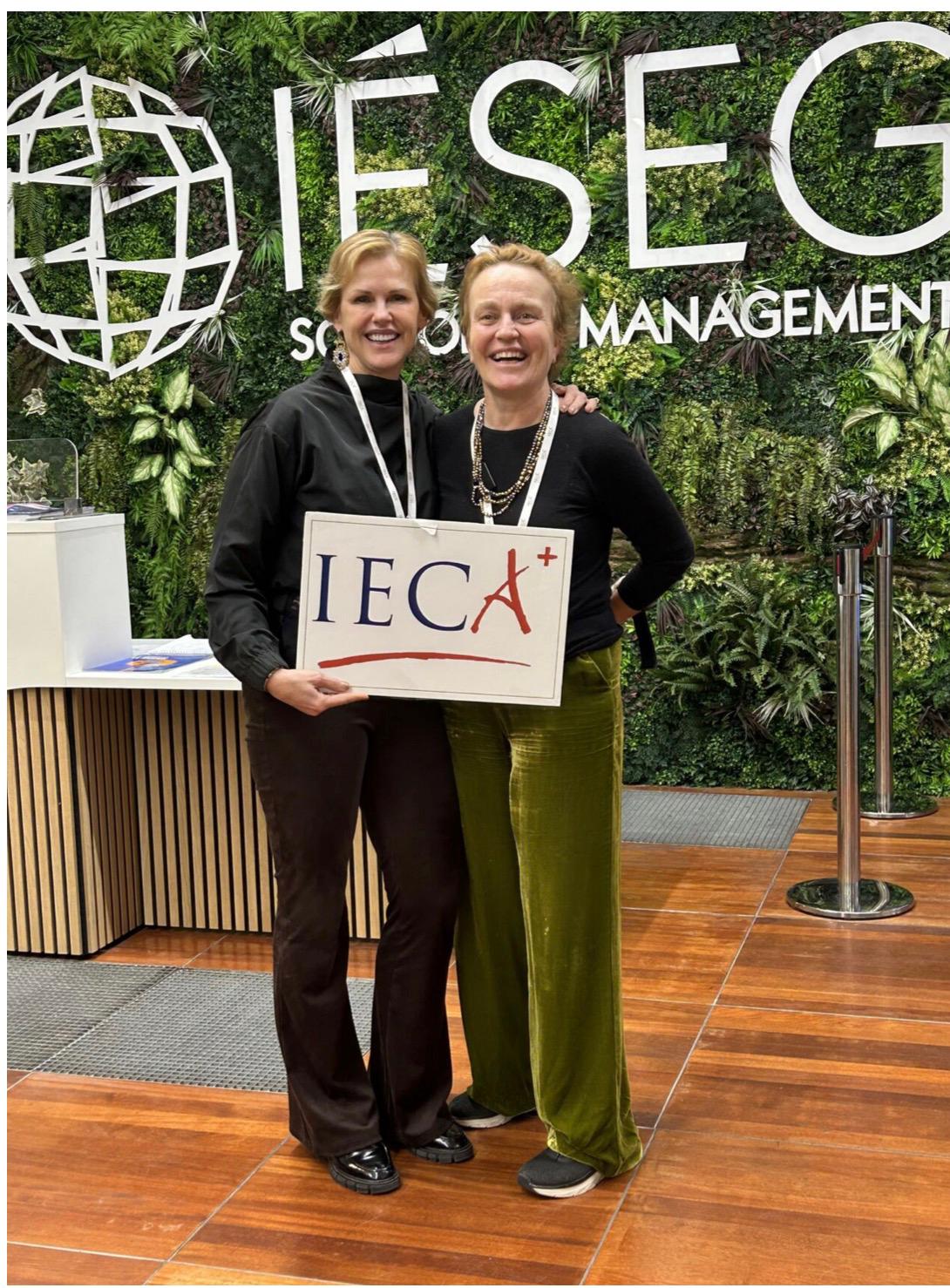
When I unpacked my suitcase upon my return from Paris, I realized that the heaviest luggage was not the one filled with notes and university brochures, but the one loaded with reflections, perspectives, and new awareness. As I told you in my previous article about the reasons for my departure, I had embarked on this journey to the IECA Symposium with a very specific set of questions in my mind. They are the same questions I hear every day in my practice: how will my son find his place in a world dominated by artificial intelligence? Or does it still make sense to make sacrifices for an international education when technology seems to be able to shorten every distance and automate every skill? Today, after two days of intense discussions, panels...

Summary When I talk to students and study abroad families, one question always comes back: how will school, university and work change in the age of artificial intelligence? In 2026, this question has become so central that I decided to help shape the scientific program of the IECA European Regional Symposium in Paris, dedicated to the "Future Learner." In this article I take you behind the scenes of these two days: why I chose to be there, who the Future Learner really is, and how AI can be an ally in study abroad choices. Not a technical account, but a compass for orientation. Why a symposium on the Future Learner (and why now) I well remember the moment I decided that the topic of the Future Learner would not...

Summary Every orientation journey is unique, made up of enthusiasms and second thoughts, fears to be faced and unexpected discoveries. In this article I tell the story of F., a student with an artistic soul who, through a months-long investigation, found her way into psychology in Berlin. A journey that involved not only her, but also her parents, who were called upon to transform anxiety into confidence. F.'s is just one of the many stories I accompany: each student has his or her own path, their own fears, their own revelations. But some dynamics are repeated, and sharing them can be helpful to those who are beginning this journey. When the creative soul meets psychology: a path of orientation through doubts, emotions and choices...

Summary As we prepare to close the doors on 2025, it is the perfect time to look ahead with renewed energy. The new year brings with it new academic programs, new competitions, and new challenges to embrace. In this end-of-year article, we take stock of what it really means to set yourself up for success in 2026-not only with up-to-date information on the best international university pathways, but with the same drive and dedication that has accompanied us so far. There is something symbolic about closing out a year. It is like turning the last page of an important chapter, with the knowledge that the next one is yet to be written. 2025 has been a busy year for so many families I have accompanied. We have explored...

Summary When a family decides to consider an international academic pathway, the question about financial investment and future return is inevitable and necessary. However, limiting the analysis to the first salary or the immediate prestige of the degree risks being a myopic view. In this in-depth analysis, we look at how the out-of-country study experience radically affects career prospects in the medium and long term. It is not just about enriching the resume, but about building a "future-proof" professionalism. We will see how change management, cultural adaptability and acquired method are the real keys to accessing the most ambitious professional opportunities in an ever-changing job market. The legitimate investment doubt: is it worth it? In my...

Summary A journey into the heart of German academic excellence, from Munich to Berlin via Karlsruhe. This is not just a diary of a college tour, but a real immersion into the future of higher education. In this article we take you with us to discover three cities and their universities, each with a unique soul: the pulsating innovation of Munich, the depth of research in Karlsruhe, and the creative energy of Berlin. A journey designed for those who have to choose a university in Germany and are looking for guidance beyond brochures, based on direct experience and a deep understanding of what each campus can offer. Our journey for you: a tour for choosing a university in Germany 1. Our mission: to be...

Summary This article offers a comprehensive guide for students beginning a study abroad journey, emphasizing how building connections is critical to a successful experience. The text takes students through the different stages of their journey, starting with the steps to take before departure, such as using university social media and actively participating in orientation for initial integration. Once at the destination, the article provides concrete tactics for creating a social network, suggesting keeping the dorm door open, forming study groups and joining student clubs. Academically, the guide explains how to navigate the new system, interacting with professors, taking advantage of campus resources, and adapting to a...

Summary As an educational counselor, I emphasize the importance of taking advantage of downtime to find one's college best fit through strategies of self-reflection, active research, and planning. The post explores practical methods for orientation: from creating a "passion journal" to campus visits, from building an academic profile to the supportive role of parents. The goal is to guide students toward an informed choice that goes beyond prestige, prioritizing alignment with their personal and professional aspirations. As an educational counselor who specializes in guiding students toward college pathways abroad, I observe each year the transformative potential of break times to identify one's academic best fit. Although August is drawing to a close, this period can still represent a valuable opportunity...

Every time I prepare a young person for his or her first departure, I find myself reliving the same question: what does it mean, today, to leave home to study across borders? In this post I gather some reflections born from the last chapter of my book and from my daily experience as an educational counselor: an integrated look at the emotions, practical challenges and potential of a path that, despite the uncertainties of the present, remains an extraordinary resource for young people and their families. Studying abroad in the age of global uncertainties Does studying abroad require courage? Certainly, it can be a challenge for kids and families, especially at a time in history fraught with questions for the younger generation. Yet it remains a unique opportunity. A choice of presence, not escape When I started...

In my work as an educational counselor, I dedicate myself with passion and deep responsibility to accompanying students on their college choice journey, visiting universities very often. It is not just a professional task, but a real mission: to help them navigate one of the most significant and transformative moments of their lives. This is an exciting journey, but a delicate one at the same time, as it involves guiding them not only to find their academic path, but to discover their most authentic passions, their hidden talents, and to envision how to turn this into a future full of possibilities, fulfillment and success. I firmly believe that the choice of college is a crucial moment in the life of a...


An international approach is critical to successfully meeting the challenges of the future. (altro…)
Studying abroad is much more than attending a university in another country. (altro…)

One of the first questions students and parents ask is just that: but how much does it cost to study abroad? (altro…)
