
Future Learner: why I'm in Paris to talk about students, AI and study abroad choices
Summary
When I talk to students and families about studying abroad, one question always comes up: how are school, university, and work changing in the age of artificial intelligence? By 2026, this question had become so central that I decided to contribute to defining the scientific program of the IECA European Regional Symposium in Paris, dedicated to the “Future Learner”. In this article, I take you behind the scenes of these two days: why I chose to be there, who the Future Learner really is, and how AI can be an ally in study abroad choices. Not a technical report, but a compass to guide you.
Why a symposium on the “Future Learner” (and why now)
I remember well the moment when I decided that the theme of the Future Learner could no longer remain only in the background of my consultations. Over the past few years, I have seen a change in the way students seek information, build dreams, imagine their place in the world: no longer just brochures and open days, but also chats, generative tools, videos promising perfect “tailor-made paths in a few clicks.”.
Meanwhile, universities are revising courses, methods, and services to respond to a rapidly changing job market, as I also recount when I talk about study abroad in 2026 . The Future Learner is right here in the midst of these forces.
- Must choose a course of study that will stay with him/her for years, while technologies change in a matter of months.
- Must learn to use AI to inform, to write, to research--without delegating the task of thinking to her.
- Must build skills “future-proof” (problem solving, cross-cultural skills, autonomy) in a context that seems to want to shorten all labors.
The IECA Symposium in Paris was created for exactly that: to bring together independent educational consultants, European universities and authoritative voices such as Andreas Schleicher (OECD) to ask, with honesty, what it means to be a Future Learner today and how we can best accompany those who are about to put the world in their backpacks.
What I will bring to Paris from my work with students and families.
Before I fly to Paris, I take dozens of conversations with me: kids asking if a college degree “will stand up to AI,” parents fearing their children will “stop engaging because there's a chatbot anyway,” families trying to figure out if investing in a study abroad still makes sense in such a mobile world.
The Future Learner I see every day has some recurring traits:
- He is curious, but also tired of the idea of always having to be “up to date on everything.”.
- They use digital tools naturally, but often struggle to distinguish in-depth study from shortcuts.
- He is aware that studying outside can be life-changing, but he lucidly asks “is it really worth it?” - a question we often address when talking about costs and sustainability .
In these stories, AI is not the absolute protagonist, but a constant presence: from the way research is done on courses and universities (with its ambiguities) to expectations about the jobs of the future. In Paris, I will bring this perspective “from below”: not the Future Learner of the reports, but the one I meet at the first orientation meeting, when, together, we begin to build that journey that I often recount in my articles as a journey of growth and connections .
Future Learner: who he really is, beyond labels
After months working on this Symposium, I realized that the word “Future Learner” is in danger of becoming a slogan if we do not fill it with faces, stories, contradictions. For me, today, it means at least three things:
- He is a student who knows that the world will change many times throughout his life, and so he seeks paths that make him flexible, curious, and able to reinvent himself.
- He is a person Which does not want to be defined only by a technology (AI or otherwise), but who wants to build a “future-proof” professionalism made up of soft skills, as I often tell when we talk about journey of growth .
- It is someone who calls for capable adults to step back from their fears, to instead stand alongside and provide tools, as I describe in many of the journey stories I share on the blog.
In day-to-day work, this translates into small gestures: choosing together a summer program that really trains critical thinking, not just the ability to “use AI”; evaluating universities that talk about interdisciplinarity and not just single technical skills; planning a sustainable financial path with the 7-step guide to study abroad , because without economic sustainability even the most beautiful project remains on paper.
For me, participating in the design and storytelling of a Symposium on the Future Learner means this: continuing to build a bridge between what is happening on the big international scenes and what happens when a student knocks on my door (even a virtual one) and says, “I would like to study abroad, but I don't know where to start.”.
If you are reading these lines and you recognize yourself, as a parent or as a student, in at least one of the questions I have mentioned, know that you are not alone: the Future Learner is not a textbook label, he or she is a person on a journey. And my job, today more than ever, is to walk alongside you, figuring out together what the next step will be.

Recent Articoli
Summary The latest Open Doors annual report, Pubblicato by the Institute of International Education (IIE) on behalf of the U.D. Department of State, an official snapshot of international academic mobility in the United States, provides data that deserves in-depth reflection by those working in schools, universities, and guidance counseling: Italy confirms its 1st place ranking worldwide among destinations chosen by U.D. university students for their study abroad periods, welcoming 15% of the global total (46,663 students, an increase of +4% and a new all-time high); on the podium, we precede Spain (13%, with 39,794 students) and the United Kingdom (12%), within a framework where Europe attracts a total of 64% of mobile U.D. university students across more than 180 destinations; behind...

Summary More and more young People As to my office with a new doubt: does it still make sense to study medicine, engineering, or architecture if artificial intelligence risks making these professions superfluous? Starting from a recent article Pubblicato in Times Higher Education and data from the World Economic Forum, In this article we will see: what research really says about the future of work; how to distinguish a change of passion from a change dictated by fear, with four questions to ask yourself before deciding; why many professions are transforming rather than disappearing; which interdisciplinary paths allow for combining passion and technology; why international university systems offer more flexibility than one might think; practical advice for families and students and answers to the most...
Summary In this guide, I will accompany you through the APPLICATION season for Dutch universities 2027/2028. We will cover: Why Ottobre 1st, the day StudyLink opens, is the real starting point for the most organized families. What Numerus Fixus is and why the Gennaio 15th deadline allows no exceptions. The difference between Research Universities (WO) and Universities of Applied Sciences (HBO), and how to choose. What the political debate on English-taught courses is about (and why there is reason for optimism today). How to face the real Dutch challenge: finding accommodation. A month-by-month roadmap and answers to the most frequently asked questions. Ottobre, the month the Dutch door opens Every year, at the beginning of...

Summary Studying in the United States today costs between $80,000 and $90,000 for year, while in Europe many public universities offer high-profile degree programs in English at much more sustainable costs. In this guide, I compare the American university model with the European one on three concrete fronts: real costs, bureaucratic visa protections, and long-term ROI. You will also find practical tips for planning the family budget and answers to the most frequently asked questions from parents and students. In my practice, between the dreams of young People and the choices of families In my work as an educational counselor, I meet parents and students every day grappling with one of the most important decisions of their lives: the choice...

Summary In this guide, we will explore how to transform the summer months into a strategic resource for applying to universities abroad. We will analyze: How to build a competitive profile ('Career Capital') without resorting to formal internships. How to critically select target countries among the Netherlands, Germany, the United Kingdom, and Ireland. The technical management of APPLICATION portals (UCAS, Chief Administrative Officer, StudyLink, Uni-assist). A clear month-by-month roadmap from Luglio to Settembre. Every year, around Settembre, I receive dozens of calls that almost always start the same way: "We discovered all the deadlines for applying to universities abroad too late." During the summer, while school is out, time seems to stretch, and the idea of thinking about university feels distant. Then Settembre arrives: the...
On Luglio 10th, I will be a guest at H-FARM to conduct the workshop "Your Path", a special session designed for a group of 15 young People aged 16 to 18 who are completing an intense week of training, sports, and personal growth. As I finalize the agenda and review the slide deck we'll use during the day, I find myself reflecting on a question I hear repeatedly in my office, especially from parents: "What is the right path?". It'D a legitimate question, full of expectations and, often, a good dose of anxiety. But the truth is, when it comes to the future and university, there isn'G ONE right path in...
Summary For years I have accompanied Italian students who wished to build their university path outside of Italy. This time, however, the perspective has been reversed, and it was precisely this that made the Experience so interesting. Working as Italy Country Expert for Briteguides, I found myself taking the opposite path: telling Italy, its university system, its opportunities, and also its complexities, to international students, families, and counselors who look to my country as a possible study destination. This change of direction made me reflect on a point that I consider central to my work: studying abroad does not just mean moving geographically, but entering into a new relationship with the world, with others, and with oneself. In...
Summary The article emphasizes the crucial importance of timing in the university path abroad, explaining that the right time to start is often sooner than one might think. Planning ideally begins before high school, with "sowing before reaping," focusing on building a solid profile and language skills. The path takes concrete shape in the third year (or equivalent), the moment to start exploring university systems and consider initial guidance counseling. The penultimate year is defined as the "heart of planning," the year to start the complete orientation process, define the budget, work on the extracurricular profile, and prepare for standardized tests. Finally, the last year is for applications, with crucial deadlines extending from Ottobre to Marzo. The guide also addresses...
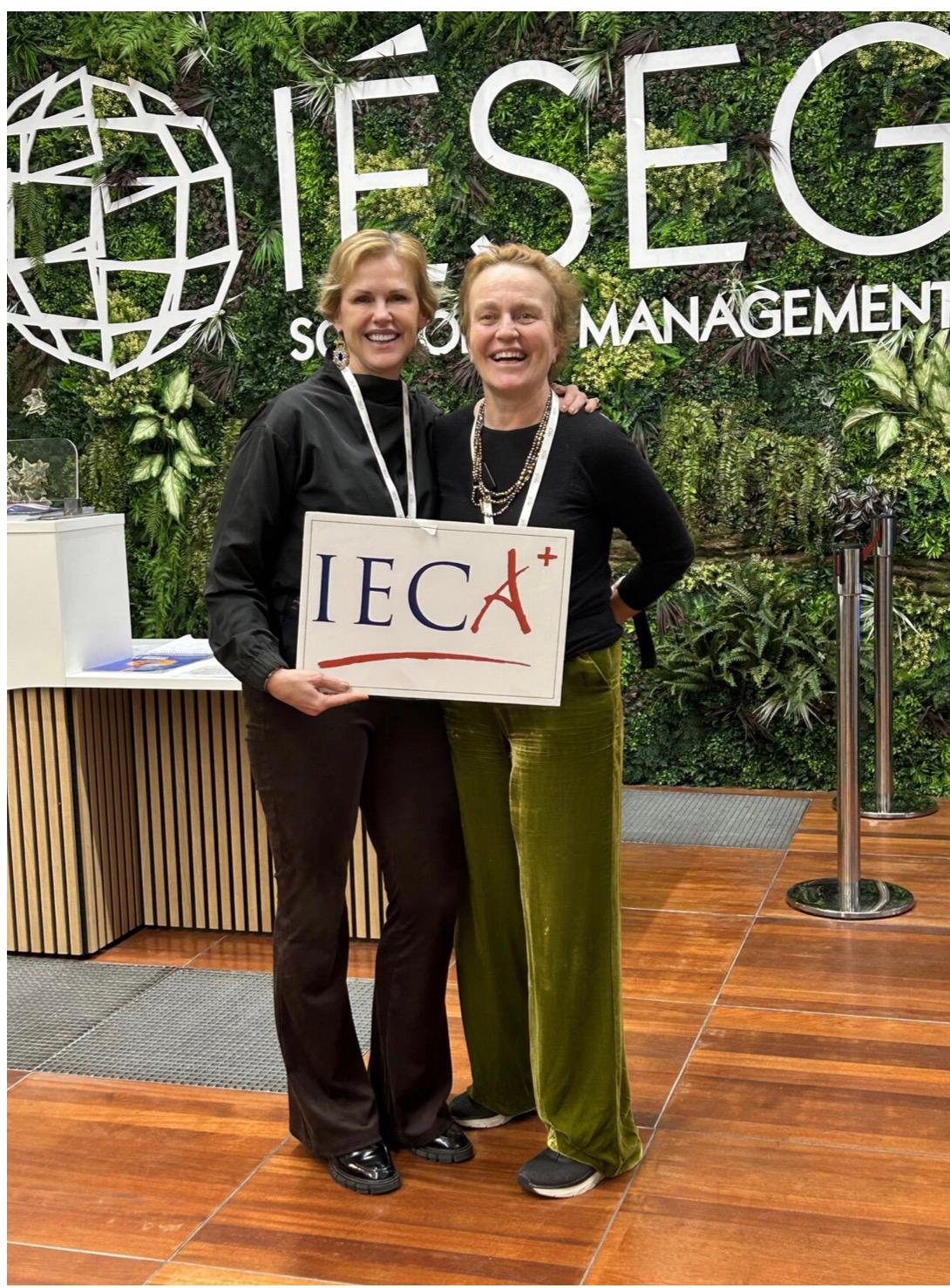
When I unpacked my suitcase upon my return from Paris, I realized that the heaviest luggage was not the one filled with notes and university brochures, but the one loaded with reflections, perspectives, and new awareness. As I told you in my previous article about the reasons for my departure, I had embarked on this journey to the IECA Symposium with a very specific set of questions in my mind. They are the same questions I hear every day in my practice: how will my son find his place in a world dominated by artificial intelligence? Or does it still make sense to make sacrifices for an international education when technology seems to be able to shorten every distance and automate every skill? Today, after two days of intense discussions, panels...

Summary When I talk to students and families about studying abroad, one question always comes up: how are school, university, and work changing in the age of artificial intelligence? By 2026, this question had become so central that I decided to contribute to defining the scientific program of the IECA European Regional Symposium in Paris, dedicated to the "Future Learner". In this article, I take you behind the scenes of these two days: why I chose to be there, who the Future Learner really is, and how AI can be an ally in study abroad choices. Not a technical report, but a compass to guide you. Why a symposium on the “Future Learner” (and why now) I clearly remember the moment I decided that the Tema of the Future Learner was not...

Summary Every orientation journey is unique, made up of enthusiasms and second thoughts, fears to be faced and unexpected discoveries. In this article I tell the story of F., a student with an artistic soul who, through a months-long investigation, found her way into psychology in Berlin. A journey that involved not only her, but also her parents, who were called upon to transform anxiety into confidence. F.'s is just one of the many stories I accompany: each student has his or her own path, their own fears, their own revelations. But some dynamics are repeated, and sharing them can be helpful to those who are beginning this journey. When the creative soul meets psychology: a path of orientation through doubts, emotions and choices...

Summary As we prepare to close the doors on 2025, it is the perfect time to look ahead with renewed energy. The new year brings with it new academic programs, new competitions, and new challenges to embrace. In this end-of-year article, we take stock of what it really means to set yourself up for success in 2026-not only with up-to-date information on the best international university pathways, but with the same drive and dedication that has accompanied us so far. There is something symbolic about closing out a year. It is like turning the last page of an important chapter, with the knowledge that the next one is yet to be written. 2025 has been a busy year for so many families I have accompanied. We have explored...

Summary When a family decides to consider an international academic pathway, the question about financial investment and future return is inevitable and necessary. However, limiting the analysis to the first salary or the immediate prestige of the degree risks being a myopic view. In this in-depth analysis, we look at how the out-of-country study experience radically affects career prospects in the medium and long term. It is not just about enriching the resume, but about building a future-proof professionalism. We will see how change management, cultural adaptability and acquired method are the real keys to accessing the most ambitious professional opportunities in an ever-changing job market. The legitimate investment doubt: is it worth it? In my...

Summary A journey into the heart of German academic excellence, from Munich to Berlin via Karlsruhe. This is not just a college tour diary, but a true immersion into the future of higher education. In this article, we take you with us to discover three cities and their universities, each with a unique soul: Munich'D pulsating innovation, Karlsruhe'D research depth, and Berlin'D creative energy. A path designed for those who need to choose a university in Germany and are looking for a guide that goes beyond brochures, based on direct Experience and a deep understanding of what each campus can offer. Our journey for you: a tour to choose a university in Germany 1. Our mission: to be...

Summary This article offers a comprehensive guide for students beginning a study abroad journey, emphasizing how building connections is critical to a successful experience. The text takes students through the different stages of their journey, starting with the steps to take before departure, such as using university social media and actively participating in orientation for initial integration. Once at the destination, the article provides concrete tactics for creating a social network, suggesting keeping the dorm door open, forming study groups and joining student clubs. Academically, the guide explains how to navigate the new system, interacting with professors, taking advantage of campus resources, and adapting to a...

Summary As an educational counselor, I emphasize the importance of using break times to find your best university fit through self-reflection, active research, and planning strategies. The Articolo explores practical guidance methods: from creating a "passion journal" to campus visits, from building an academic profile to the supportive role of parents. The goal is to guide students towards a conscious choice that goes beyond prestige, prioritizing alignment with their personal and professional aspirations. As an educational counselor specializing in guiding students toward university paths abroad, I observe the transformative potential of break times each year to identify their best academic fit. Although Agosto is drawing to a close, this period can still represent a valuable opportunity...

Every time I prepare a young person for his or her first departure, I find myself reliving the same question: what does it mean, today, to leave home to study across borders? In this post I gather some reflections born from the last chapter of my book and from my daily experience as an educational counselor: an integrated look at the emotions, practical challenges and potential of a path that, despite the uncertainties of the present, remains an extraordinary resource for young people and their families. Studying abroad in the age of global uncertainties Does studying abroad require courage? Certainly, it can be a challenge for kids and families, especially at a time in history fraught with questions for the younger generation. Yet it remains a unique opportunity. A choice of presence, not escape When I started...

In my work as an educational counselor, I dedicate myself with passion and deep responsibility to accompanying students on their college choice journey, visiting universities very often. It is not just a professional task, but a real mission: to help them navigate one of the most significant and transformative moments of their lives. This is an exciting journey, but a delicate one at the same time, as it involves guiding them not only to find their academic path, but to discover their most authentic passions, their hidden talents, and to envision how to turn this into a future full of possibilities, fulfillment and success. I firmly believe that the choice of college is a crucial moment in the life of a...


An international approach is fundamental to successfully face the challenges of the future. (more…)