


Studying in Holland in English: StudyLink, Numerus Fixus selection and the housing challenge
Summary
In this guide, I will accompany you through the APPLICATION season for Dutch universities 2027/2028. We will cover:
- Because the Ottobre 1st , the day on which opens StudyLink , it is the real start for the most organized families.
- What is the Numerus Fixus and why the deadline of Gennaio 15th admits no exceptions.
- The difference between Research Universities (WO) e Universities of Applied Sciences (HBO) , and how to choose.
- What is the status of the political debate on courses in English (and why there is reason to be optimistic today).
- How to tackle the real Dutch challenge: finding accommodation .
- A month-by-month roadmap and answers to the most frequently asked questions.
Ottobre, the month when the Dutch door opens
Every year, at the beginning of Ottobre, there is a date I mark on the calendar: the opening of StudyLink , the national portal through which all applications to Dutch universities pass. For many families, this date goes unnoticed. For the more organized ones, however, it is the true starting point: from that moment on, applications for the upcoming academic year can be opened.
The Netherlands remains for me one of the most interesting countries for anyone dreaming of a university Experience abroad. It is deeply international, offers a huge variety of degree courses in English, has practical teaching oriented towards teamwork, and tuition fees that are much more accessible than in the Anglo-Saxon world (if you are doing the math, I recommend my guide to comparing costs between the USA and Europe ).
But Holland also has precise rules, strict deadlines, and a logistical challenge that surprises many parents. Let'D try to put things in order.
What is StudyLink and how does it work
StudyLink is the central registration system for Dutch higher education. You create a single account and from there you can enroll in the chosen degree programs, at any university in the country.
The point I always explain to families is this: StudyLink is just the first step After registration, each university sends (usually within a few hours or a few days) the credentials for its internal portal, where documents, report cards, language certificates, and, for some courses, motivational letters or tests must be uploaded. Many students stop at StudyLink convinced they have finished, only to discover too late that the actual APPLICATION had to be Completato elsewhere. Always check your spam folder as well.
Some useful rules to know:
- You can enter up to four degree programs simultaneously .
- Of these, at most two can be Numerus Fixus (for some medical area courses, such as Medicine or Dentistry, the limit is one).
- Applying on StudyLink is not binding: you can withdraw without cost, but be careful not to do so by mistake for a limited enrollment course, because you will lose your place in the ranking.
If you are just starting to organize your path, you can find a more general overview of European portals and deadlines (UCAS, Chief Administrative Officer, Uni-assist) on my strategic guide to applying to university abroad .
Numerus Fixus: the Gennaio 15th deadline is not moving
The Numerus Fixus it is the Dutch numerus fixus: a maximum cap of available spots set for the most requested courses. Today it affects many of the programs most coveted by Italian students, from Economics and International Business to Psychology, as well as Medicine and health-related courses.
The rule is simple and non-negotiable: for Numerus Fixus courses, registration on StudyLink must be Completato by Gennaio 15th at 11:59 PM (Central European Time). There are no extensions. One day late means losing a year.
How selection works:
- By Gennaio 15 : registration on StudyLink and, immediately after, start the procedure on the university portal (some universities set later deadlines for documents, for example at the end of Gennaio).
- Gennaio to Aprile : the actual selection. Each university sets its own criteria: school grades, knowledge tests, online assessments, motivational essays, sometimes interviews.
- Aprile 15th : StudyLink publishes the ranking number of each candidate. Those who are within the available places receive the offer.
- Within two weeks : the offer must be Confermato, otherwise the place goes to the next candidate.
My advice is not to wait until Gennaio 15th: registering on StudyLink between Ottobre and Novembre allows you to receive information in time about the selection tests, which often require study and specific preparation.
Research University or University of Applied Sciences? The choice that comes first of all
Even before choosing the city or university, there is a fundamental question to answer. The Dutch system is "binary", meaning it has two types of universities with different missions:
- Research Universities (WO, wetenschappelijk onderwijs ): these are research universities, such as Amsterdam, Leiden, Utrecht, Rotterdam, Groningen, Maastricht, or Delft. The bachelor'D degree lasts three years (180 ECTS), the approach is academic and theoretical, and the path is designed to continue with a master'D degree. They are the right choice for those who love analytical study and envision a future in research, regulated professions, or highly specialized roles.
- Universities of Applied Sciences (HBO, hoger beroepsonderwijs ): they are professionalizing universities. The degree generally lasts four years (240 ECTS), includes projects with companies and a structured internship, and directly prepares students for entering the workforce. They are ideal for practical young People who learn by doing and already have a clear idea of the profession they want to pursue.
There is no absolute best choice. There is the most suitable choice for that boy or girl, for their learning style, their ambitions, and their personality. It is exactly the principle of University best fit on which I build every orientation path.
A warning for parents: Italian students with a high school diploma are generally eligible for both systems, but many courses require specific subjects (for example, a certain level of mathematics) and an English certification. Check the requirements on the official Pagina of each individual course.
English-taught courses in Holland: what is really happening
In recent years, many families have asked me, with some concern: “But is the Netherlands closing English-taught courses?”
It is a legitimate question. Part of the Dutch political debate, concerned about the high number of international students and the pressure on housing, had pushed for a law (the Wet internationalisering in balans ) which would have made it more difficult to maintain degree courses in English, introducing a ministerial test to justify them.
I can tell you that today the situation is calmer than it seemed: that restriction did not go through as planned and everything is proceeding. The new government has announced its intention to eliminate the test on foreign-language courses, and several English-Taught Programs that were at risk of closure have been saved. However, some entry-control tools remain, such as capped numbers dedicated to non-EU students and the possibility of introducing 'emergency' limits when applications are too high.
What does this mean in practice for you? Two things: the Netherlands remains open and welcoming , but it is likely that the most requested courses will become increasingly selective. All the more reason to act quickly and to check the language of instruction of the chosen course every year.
The real challenge: finding a home in the Netherlands
If there is one piece of advice I repeatedly give to every family heading to Holland, it is this: in many cities finding accommodation is more difficult than getting admitted to university .
The country has a structural shortage of student rooms, estimated at over 20,000 beds. Amsterdam, Utrecht, Leiden, Delft, Rotterdam, and The Hague are the cities under the most pressure. Added to this are scams: fake ads, often spread on Social media, asking for deposits for non-existent rooms. International students, who are unfamiliar with the market and their rights, are among the primary targets.
Here'D how we move:
- Register early on the official student housing platforms (like ROOM.nl, DUWO, SSH), even before admission: in many cases, registration seniority counts.
- Check if the university reserves rooms for international students and apply as soon as the window opens, remembering that the offer is limited and never guaranteed.
- Never pay anything before seeing the room, in person or via a live video call, and without a regular contract.
- Check that you can register your residence at the address (municipal registration is necessary for many procedures).
- Consider less saturated cities: Groningen, Maastricht, Enschede, Tilburg, Nijmegen, or Eindhoven often offer excellent universities and a more manageable rental market.
- Budget for actual rent: in big cities, the Privato market often starts with figures higher than families imagine. To build a realistic plan, you can start from my financial guide in 7 steps .
The choice of city, therefore, is not just a matter of university prestige: it is also a choice of quality of life. And this is one of the reasons why I personally visit the universities : breathing the atmosphere of a campus and a city says a lot about where a young person can truly feel good.
The roadmap: from Ottobre to summer
| Period | What to do |
|---|---|
| Settembre-Ottobre | Define the shortlist of courses, distinguishing between WO and HBO. Check admission and language requirements. |
| Ottobre 1st | StudyLink opening: create an account and register for courses. |
| Ottobre–Dicembre | Complete applications on university portals. Schedule English certification. Sign up for accommodation platforms. |
| Gennaio 15, 11:59 PM | Absolute deadline for Numerus Fixus courses. |
| Gennaio–Aprile | Selection tests for limited enrollment courses. |
| Aprile 15th | Publication of ranking numbers on StudyLink. Confirmation of the offer within two weeks. |
| Spring | Deadlines for courses without a limited number of places (variable by university: to be verified). |
| From Aprile onwards | Intensive search for accommodation immediately after admission. |
If your boyfriend or girlfriend is still in their penultimate year of school, it'D not too early to think about it: I'll explain why in the guide on when to start planning university abroad .
A final thought
The Netherlands rewards those who get organized. Not because it is a hostile system; on the contrary, it is one of the most transparent in Europe. But precisely because the rules are clear, it leaves no room for improvisation. Starting in Ottobre means arriving in Gennaio with peace of mind, facing the selection prepared, and having time to look for housing without anxiety.
If you are considering Holland and want to understand which path is truly right for your son or daughter, write to me : we will build the strategy together, from the choice between WO and HBO to the search for accommodation. You can find all my here orientation services .
Frequently Asked Questions
When does StudyLink open for the academic year 2027/2028?
StudyLink opens on Ottobre 1, 2026. From that day on, it is possible to register for degree courses for the academic year that will begin in Settembre 2027.
What is the deadline for Numerus Fixus courses in the Netherlands?
Registration on StudyLink for courses with limited enrollment must be Completato by Gennaio 15th at 11:59 PM (Central European Time). The deadline is national and there are no extensions.
How many Numerus Fixus courses can you apply for?
At most two Numerus Fixus courses for academic year, out of a total of four possible applications on StudyLink. For some medical courses, the limit is only one course.
What is the difference between a Research University and a University of Applied Sciences?
Research Universities (WO) offer academic and theoretical bachelor'D degrees, designed to be followed by a master'D degree. Universities of Applied Sciences (HBO) offer four-year professionally oriented bachelor'D degrees, featuring company projects and an internship, geared toward direct entry into the workforce.
Is the Netherlands eliminating English-taught degree programs?
No. The restrictions outlined in the law on internationalization have been significantly scaled back, and the current government intends to eliminate the test for foreign-language courses. However, some high-demand courses Maggio introduce enrollment caps, so it is a good idea to check the language and admission procedures every year.
How difficult is it to find a house for a student in Holland?
This is the main challenge: the country has a shortage of over 20,000 student rooms, especially in major cities. It is crucial to register early on official platforms, apply for university housing as soon as possible, and be wary of listings that request advance payments.
Is the Italian high school diploma valid for Dutch universities?
Generally yes, for both Research Universities and Universities of Applied Sciences, but many courses require specific subjects (often mathematics) and an English certification such as IELTS or TOEFL. Requirements must be verified course by course.

Recent Articoli

Summary More and more young People As to my office with a new doubt: does it still make sense to study medicine, engineering, or architecture if artificial intelligence risks making these professions superfluous? Starting from a recent article Pubblicato in Times Higher Education and data from the World Economic Forum, In this article we will see: what research really says about the future of work; how to distinguish a change of passion from a change dictated by fear, with four questions to ask yourself before deciding; why many professions are transforming rather than disappearing; which interdisciplinary paths allow for combining passion and technology; why international university systems offer more flexibility than one might think; practical advice for families and students and answers to the most...
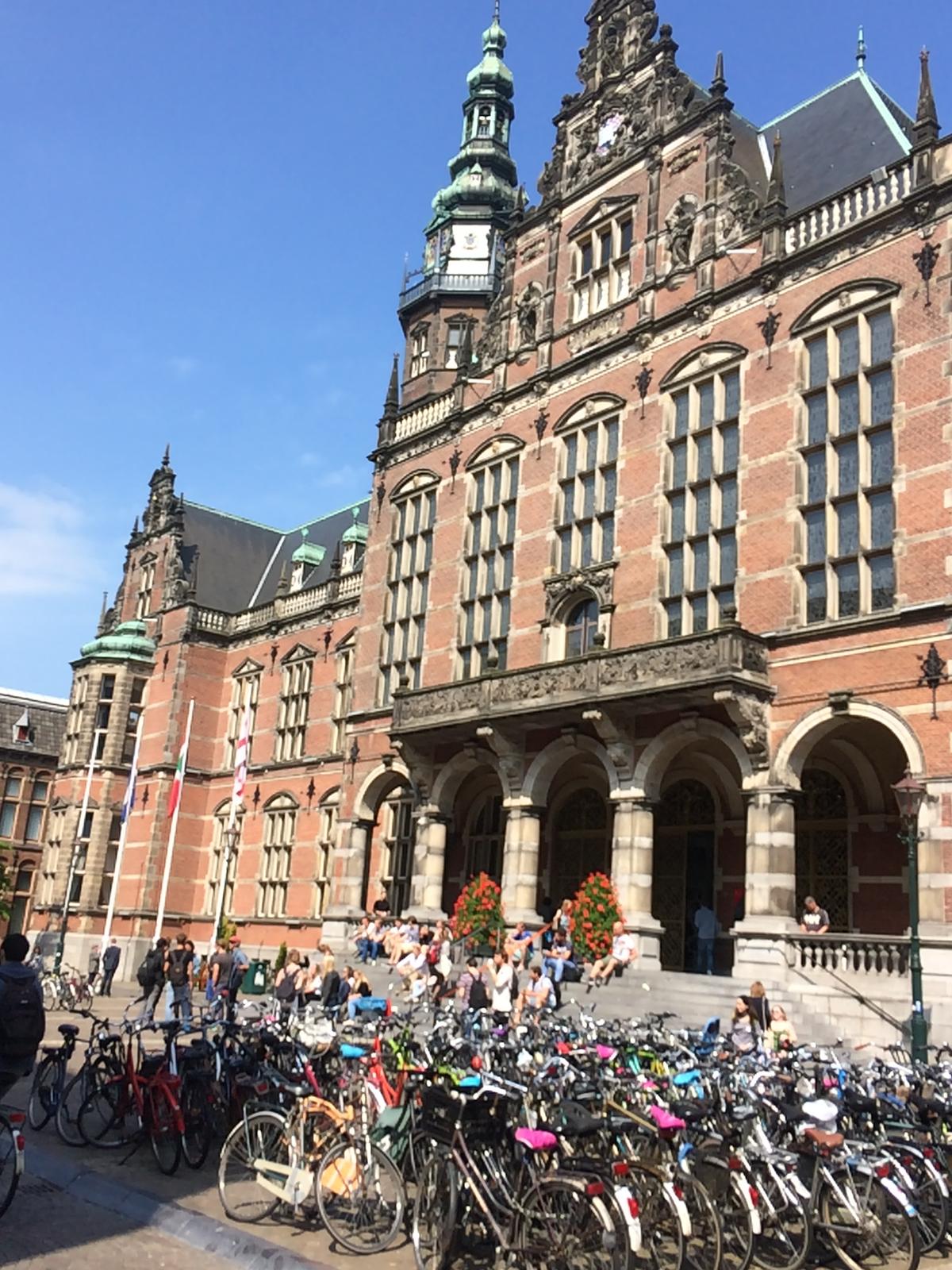
Summary In this guide, I will accompany you through the APPLICATION season for Dutch universities 2027/2028. We will cover: Why Ottobre 1st, the day StudyLink opens, is the real starting point for the most organized families. What Numerus Fixus is and why the Gennaio 15th deadline allows no exceptions. The difference between Research Universities (WO) and Universities of Applied Sciences (HBO), and how to choose. What the political debate on English-taught courses is about (and why there is reason for optimism today). How to face the real Dutch challenge: finding accommodation. A month-by-month roadmap and answers to the most frequently asked questions. Ottobre, the month the Dutch door opens Every year, at the beginning of...

Summary Studying in the United States today costs between $80,000 and $90,000 for year, while in Europe many public universities C In this guide, I compare the American university model with the European one on three concrete fronts: real costs, bureaucratic visa protections, and long-term ROI. You will also find practical advice for planning the family budget and answers to the most frequently asked questions from parents and students. In my study, between the dreams of young People and the choices of families In my work as an educational counselor, I meet parents and young People every day grappling with one of the most important decisions of their lives: choosing a university. Some arrive with clear ideas, while others present themselves...

Summary In this guide, we will explore how to transform the summer months into a strategic resource for applying to universities abroad. We will analyze: How to build a competitive profile ('Career Capital') without resorting to formal internships. How to critically select target countries among the Netherlands, Germany, the United Kingdom, and Ireland. The technical management of APPLICATION portals (UCAS, Chief Administrative Officer, StudyLink, Uni-assist). A clear month-by-month roadmap from Luglio to Settembre. Every year, around Settembre, I receive dozens of calls that almost always start the same way: "We discovered all the deadlines for applying to universities abroad too late." During the summer, while school is out, time seems to stretch, and the idea of thinking about university feels distant. Then Settembre arrives: the...
On Luglio 10th, I will be a guest at H-FARM to conduct the workshop "Your Path", a special session designed for a group of 15 young People aged 16 to 18 who are completing an intense week of training, sports, and personal growth. As I finalize the agenda and review the slide deck we'll use during the day, I find myself reflecting on a question I hear repeatedly in my office, especially from parents: "What is the right path?". It'D a legitimate question, full of expectations and, often, a good dose of anxiety. But the truth is, when it comes to the future and university, there isn'G ONE right path in...
Summary For years I have accompanied Italian students who wished to build their university path outside of Italy. This time, however, the perspective has been reversed, and it was precisely this that made the Experience so interesting. Working as Italy Country Expert for Briteguides, I found myself taking the opposite path: telling Italy, its university system, its opportunities, and also its complexities, to international students, families, and counselors who look to my country as a possible study destination. This change of direction made me reflect on a point that I consider central to my work: studying abroad does not just mean moving geographically, but entering into a new relationship with the world, with others, and with oneself. In...

Summary The article emphasizes the crucial importance of timing in the university path abroad, explaining that the right time to start is often sooner than one might think. Planning ideally begins before high school, with "sowing before reaping," focusing on building a solid profile and language skills. The path takes concrete shape in the third year (or equivalent), the moment to start exploring university systems and consider initial guidance counseling. The penultimate year is defined as the "heart of planning," the year to start the complete orientation process, define the budget, work on the extracurricular profile, and prepare for standardized tests. Finally, the last year is for applications, with crucial deadlines extending from Ottobre to Marzo. The guide also addresses...
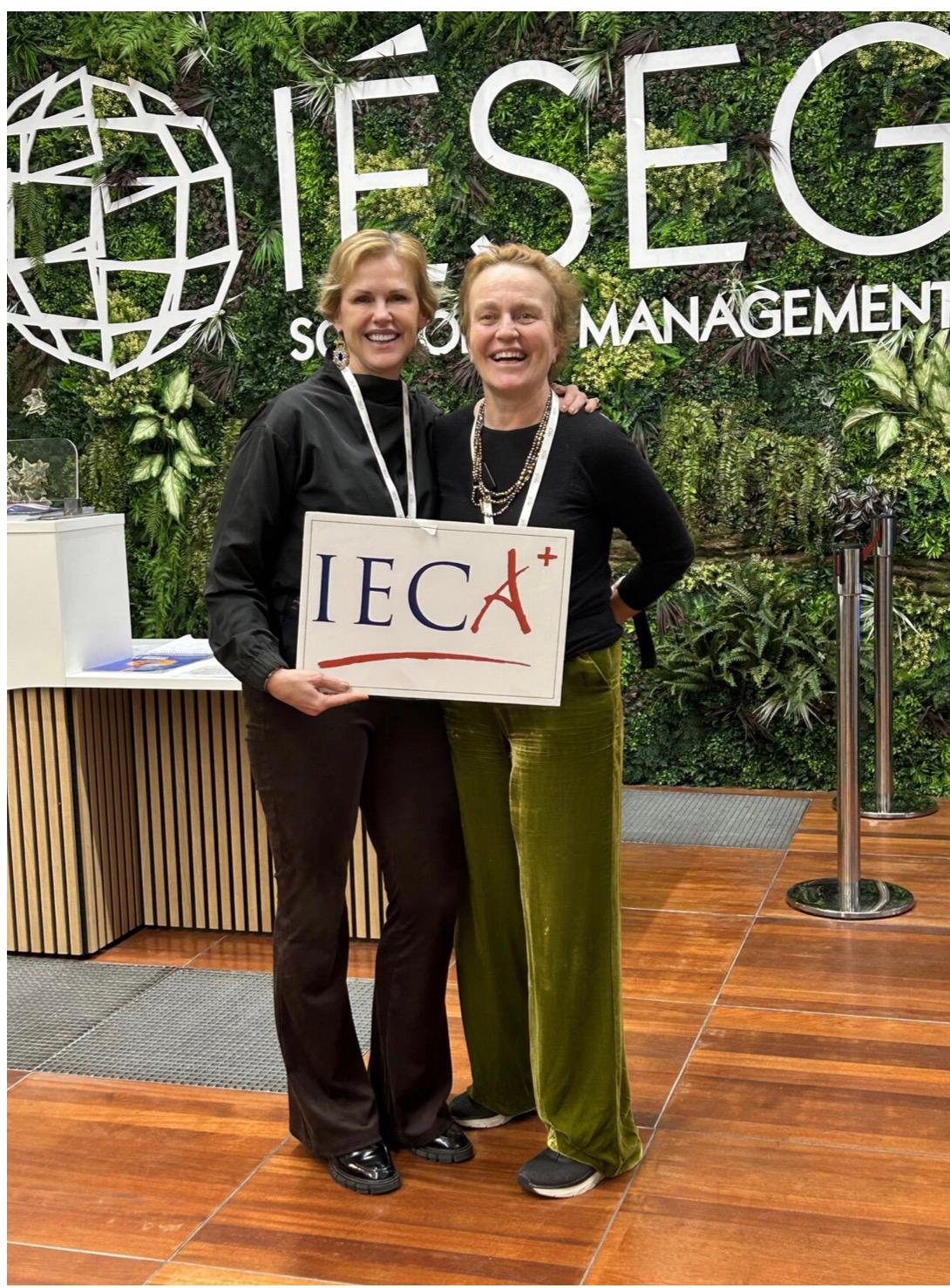
When I unpacked my suitcase upon my return from Paris, I realized that the heaviest luggage was not the one filled with notes and university brochures, but the one loaded with reflections, perspectives, and new awareness. As I told you in my previous article about the reasons for my departure, I had embarked on this journey to the IECA Symposium with a very specific set of questions in my mind. They are the same questions I hear every day in my practice: how will my son find his place in a world dominated by artificial intelligence? Or does it still make sense to make sacrifices for an international education when technology seems to be able to shorten every distance and automate every skill? Today, after two days of intense discussions, panels...

Summary When I talk to students and families about studying abroad, one question always comes up: how are school, university, and work changing in the age of artificial intelligence? By 2026, this question had become so central that I decided to contribute to defining the scientific program of the IECA European Regional Symposium in Paris, dedicated to the "Future Learner". In this article, I take you behind the scenes of these two days: why I chose to be there, who the Future Learner really is, and how AI can be an ally in study abroad choices. Not a technical report, but a compass to guide you. Why a symposium on the “Future Learner” (and why now) I clearly remember the moment I decided that the Tema of the Future Learner was not...

Summary Every orientation journey is unique, made up of enthusiasms and second thoughts, fears to be faced and unexpected discoveries. In this article I tell the story of F., a student with an artistic soul who, through a months-long investigation, found her way into psychology in Berlin. A journey that involved not only her, but also her parents, who were called upon to transform anxiety into confidence. F.'s is just one of the many stories I accompany: each student has his or her own path, their own fears, their own revelations. But some dynamics are repeated, and sharing them can be helpful to those who are beginning this journey. When the creative soul meets psychology: a path of orientation through doubts, emotions and choices...

Summary As we prepare to close the doors on 2025, it is the perfect time to look ahead with renewed energy. The new year brings with it new academic programs, new competitions, and new challenges to embrace. In this end-of-year article, we take stock of what it really means to set yourself up for success in 2026-not only with up-to-date information on the best international university pathways, but with the same drive and dedication that has accompanied us so far. There is something symbolic about closing out a year. It is like turning the last page of an important chapter, with the knowledge that the next one is yet to be written. 2025 has been a busy year for so many families I have accompanied. We have explored...

Summary When a family decides to consider an international academic pathway, the question about financial investment and future return is inevitable and necessary. However, limiting the analysis to the first salary or the immediate prestige of the degree risks being a myopic view. In this in-depth analysis, we look at how the out-of-country study experience radically affects career prospects in the medium and long term. It is not just about enriching the resume, but about building a future-proof professionalism. We will see how change management, cultural adaptability and acquired method are the real keys to accessing the most ambitious professional opportunities in an ever-changing job market. The legitimate investment doubt: is it worth it? In my...

Summary A journey into the heart of German academic excellence, from Munich to Berlin via Karlsruhe. This is not just a college tour diary, but a true immersion into the future of higher education. In this article, we take you with us to discover three cities and their universities, each with a unique soul: Munich'D pulsating innovation, Karlsruhe'D research depth, and Berlin'D creative energy. A path designed for those who need to choose a university in Germany and are looking for a guide that goes beyond brochures, based on direct Experience and a deep understanding of what each campus can offer. Our journey for you: a tour to choose a university in Germany 1. Our mission: to be...

Summary This article offers a comprehensive guide for students beginning a study abroad journey, emphasizing how building connections is critical to a successful experience. The text takes students through the different stages of their journey, starting with the steps to take before departure, such as using university social media and actively participating in orientation for initial integration. Once at the destination, the article provides concrete tactics for creating a social network, suggesting keeping the dorm door open, forming study groups and joining student clubs. Academically, the guide explains how to navigate the new system, interacting with professors, taking advantage of campus resources, and adapting to a...

Summary As an educational counselor, I emphasize the importance of using break times to find your best university fit through self-reflection, active research, and planning strategies. The Articolo explores practical guidance methods: from creating a "passion journal" to campus visits, from building an academic profile to the supportive role of parents. The goal is to guide students towards a conscious choice that goes beyond prestige, prioritizing alignment with their personal and professional aspirations. As an educational counselor specializing in guiding students toward university paths abroad, I observe the transformative potential of break times each year to identify their best academic fit. Although Agosto is drawing to a close, this period can still represent a valuable opportunity...

Every time I prepare a young person for his or her first departure, I find myself reliving the same question: what does it mean, today, to leave home to study across borders? In this post I gather some reflections born from the last chapter of my book and from my daily experience as an educational counselor: an integrated look at the emotions, practical challenges and potential of a path that, despite the uncertainties of the present, remains an extraordinary resource for young people and their families. Studying abroad in the age of global uncertainties Does studying abroad require courage? Certainly, it can be a challenge for kids and families, especially at a time in history fraught with questions for the younger generation. Yet it remains a unique opportunity. A choice of presence, not escape When I started...

In my work as an educational counselor, I dedicate myself with passion and deep responsibility to accompanying students on their college choice journey, visiting universities very often. It is not just a professional task, but a real mission: to help them navigate one of the most significant and transformative moments of their lives. This is an exciting journey, but a delicate one at the same time, as it involves guiding them not only to find their academic path, but to discover their most authentic passions, their hidden talents, and to envision how to turn this into a future full of possibilities, fulfillment and success. I firmly believe that the choice of college is a crucial moment in the life of a...


An international approach is fundamental to successfully face the challenges of the future. (more…)
Studying abroad is much more than attending a university in another country. (more…)

