

Beyond the title: how studying abroad transforms real career prospects
Summary
When a family decides to consider an international academic path, the question about the economic investment and future return is inevitable and necessary. However, limiting the analysis to the first salary or the immediate prestige of the degree risks being a short-sighted view. In this in-depth analysis, we examine how the Experience of studying abroad radically impacts career prospects in the medium and long term. It'D not just about enriching your resume, but about building a "future-proof" professionalism. We will see how change management, cultural adaptability, and the acquired method are the real keys to accessing the most ambitious professional opportunities in a constantly evolving job market.
The legitimate doubt about the investment: is it worth it?
In the my years of consulting , I have met hundreds of families sitting at my desk (or connected via Zoom), united by a mix of enthusiasm and concern. When you start planning a university future outside of Italy, whether in the United States, the United Kingdom, in Spain, in Germany or in Northern Europe, the issue of economic and temporal investment is always the "elephant in the room". It is not only a legitimate concern, but an act of profound parental responsibility.
The question I am often asked, sometimes directly, other times left implied between the lines of a family budget to balance, is always the same: Is it really worth it? What guarantees does this path offer for my child's professional future?
The short answer is yes, it'D worth it. But the long answer, the one that really matters, requires looking beyond the immediate numbers. Although all statistics confirm that international profiles enjoy preferential treatment in selection processes, the real competitive advantage does not lie in a simple “piece of paper”. Improving your career prospects it'D not just a matter of starting salary or job title . The real value arises from the substance of the person who is going to be built during those crucial years.
Study abroad , in fact, means acquiring a mental, character and methodological structure that companies today desperately seek and struggle to find in traditional paths.
1. Solid formation: the primacy of method over content
The first tangible impact on future opportunities comes from the different academic approach. Italian universities boast recognized strengths: solid theoretical preparation, broad general knowledge, and analytical skills that form a strong foundation. At the same time, the contemporary world of work also demands skills that other university systems—especially those of Anglo-Saxon or Northern European origin—have historically favored: a more pragmatically oriented approach, with greater emphasis on practical projects, case studies, and group work that simulate real professional contexts.
In these universities, students are almost never asked to "know and repeat". They are asked to solve. Frontal lectures are reduced to a minimum to make room for case studies , group work (often with peers of different nationalities and contrasting approaches), real projects commissioned by companies, and tight deadlines that do not allow for exceptions.
Choose to form in such a challenging and high-performance environment means learning a rigorous working method. The student learns to manage time (the famous time management ), to filter essential information, to speak in public defending one'D ideas, and to accept constructive feedback not as a judgment on the person, but as a tool for growth. This is the basis of solid training: not a baggage of notions that risk becoming obsolete in a few years, but a methodological “toolbox” that allows one to face any future work challenge with competence, autonomy, and confidence.
2. The number one skill: change management
If I had to identify the element that most positively influences the career prospects in 2025 and beyond, I would have no doubts: it is the ability to manage change and uncertainty.
We live in a world that experts call VUCA ( Volatile, Uncertain, Complex, Ambiguous ). Companies restructure cyclically, markets are born and die, and technologies revolutionize roles every five years. In this scenario, technical expertise alone is no longer enough. Resilience is needed.
Who decides to Study abroad is effectively attending an intensive master'D degree in crisis management.
Think about it for a moment: from the exact moment the student lands in the new country, they leave the protective bubble of family and the familiar. They must decipher different cultural and Social codes (how do you greet someone? how do you ask for a favor? what is considered rude?), they must overcome the shock of the unknown, they must manage bureaucracy, health, housing, meals. And they must do it in a language that is not their mother tongue.
This daily Experience trains mental flexibility like no corporate course ever could. Those who have learned to feel at home away from home, those who have overcome the loneliness of the first weeks and transformed it into independence, develop a different "skin".
A candidate with this background does not fear business transitions, does not panic if moved to a foreign market, does not freeze in the face of a new problem. He has already proven to himself that he can survive and thrive in change. It is this inner solidity that shines in the eyes of a headhunter during an interview.
3. Beyond English: the "soft" skills that make a difference
People often think the main advantage is the language. " Go abroad so you learn perfect English ." Sure, language proficiency at the level of business proficiency is now a prerequisite (a commodity , economists would say), no longer a differentiator.
The real skills that expand the career prospects are the so-called Soft Skills o Power Skills .
- Creative problem solving: being exposed to different cultures teaches that there is no single way to solve a problem. The international student learns to view challenges from multiple angles, developing lateral thinking that is pure gold for innovation.
- Cultural intelligence and empathy: working in a team with an Indian guy, a Brazilian girl, and a German professor forces you to develop acute relational sensitivity. You learn to negotiate, to mediate, to understand the unsaid. In a global economy, where teams are remote and distributed, this capacity for human connection is irreplaceable.
- Autonomous decision-making: without the immediate safety net of parents, you learn how to make decisions, take responsibility for them (including financial) and correct your course if you are wrong. You become an adult sooner.
4. Natural positioning in the labor market
Let us therefore return to the question of ROI (Return on Investment). When I speak of an improvement in career prospects , I am not referring to a magical promise, but rather a logical consequence.
The positioning of those who have studied abroad is naturally higher, because the profile is more complete.
Recruiters and personnel managers, when they read a international curriculum , they see much more than just the technical skills listed. They see a story.
They see a person who has had the courage to step out of their own comfort zone (an overused term, but very true). They see intellectual curiosity. They see healthy ambition. They see someone invested in themselves.
This results in privileged access to:
- Programs graduate Of multinational corporations.
- Roles in innovative start-ups seeking a flexible mindset.
- Positions in international organizations and NGOs.
- Entrepreneurial careers, thanks to the global network of contacts built on campus.
An investment in the person
In conclusion, I believe it is necessary to reconsider the perspective with which we view this expense. Sending a child to study abroad is not the purchase of a service, nor is it the acquisition of a prestigious degree. It is an investment in the foundational structure of the person.
The opportunity to train as open, competent, solid individuals ready for change is the ultimate added value. It is a heritage that no one can ever take away from them, regardless of economic fluctuations or technological changes. It is the most solid, concrete, and lasting guarantee we can offer our young People: not only a successful career, but also a fulfilling and aware professional life.
If you want to explore this possibility, I remain at your disposal to explore together what we can build for your children's future.

Recent Articoli
Summary The latest Open Doors annual report, Pubblicato by the Institute of International Education (IIE) on behalf of the U.D. Department of State, an official snapshot of international academic mobility in the United States, provides data that deserves in-depth reflection by those working in schools, universities, and guidance counseling: Italy confirms its 1st place ranking worldwide among destinations chosen by U.D. university students for their study abroad periods, welcoming 15% of the global total (46,663 students, an increase of +4% and a new all-time high); on the podium, we precede Spain (13%, with 39,794 students) and the United Kingdom (12%), within a framework where Europe attracts a total of 64% of mobile U.D. university students across more than 180 destinations; behind...

Summary More and more young People As to my office with a new doubt: does it still make sense to study medicine, engineering, or architecture if artificial intelligence risks making these professions superfluous? Starting from a recent article Pubblicato in Times Higher Education and data from the World Economic Forum, In this article we will see: what research really says about the future of work; how to distinguish a change of passion from a change dictated by fear, with four questions to ask yourself before deciding; why many professions are transforming rather than disappearing; which interdisciplinary paths allow for combining passion and technology; why international university systems offer more flexibility than one might think; practical advice for families and students and answers to the most...
Summary In this guide, I will accompany you through the APPLICATION season for Dutch universities 2027/2028. We will cover: Why Ottobre 1st, the day StudyLink opens, is the real starting point for the most organized families. What Numerus Fixus is and why the Gennaio 15th deadline allows no exceptions. The difference between Research Universities (WO) and Universities of Applied Sciences (HBO), and how to choose. What the political debate on English-taught courses is about (and why there is reason for optimism today). How to face the real Dutch challenge: finding accommodation. A month-by-month roadmap and answers to the most frequently asked questions. Ottobre, the month the Dutch door opens Every year, at the beginning of...

Summary Studying in the United States today costs between $80,000 and $90,000 for year, while in Europe many public universities offer high-profile degree programs in English at much more sustainable costs. In this guide, I compare the American university model with the European one on three concrete fronts: real costs, bureaucratic visa protections, and long-term ROI. You will also find practical tips for planning the family budget and answers to the most frequently asked questions from parents and students. In my practice, between the dreams of young People and the choices of families In my work as an educational counselor, I meet parents and students every day grappling with one of the most important decisions of their lives: the choice...

Summary In this guide, we will explore how to transform the summer months into a strategic resource for applying to universities abroad. We will analyze: How to build a competitive profile ('Career Capital') without resorting to formal internships. How to critically select target countries among the Netherlands, Germany, the United Kingdom, and Ireland. The technical management of APPLICATION portals (UCAS, Chief Administrative Officer, StudyLink, Uni-assist). A clear month-by-month roadmap from Luglio to Settembre. Every year, around Settembre, I receive dozens of calls that almost always start the same way: "We discovered all the deadlines for applying to universities abroad too late." During the summer, while school is out, time seems to stretch, and the idea of thinking about university feels distant. Then Settembre arrives: the...
On Luglio 10th, I will be a guest at H-FARM to conduct the workshop "Your Path", a special session designed for a group of 15 young People aged 16 to 18 who are completing an intense week of training, sports, and personal growth. As I finalize the agenda and review the slide deck we'll use during the day, I find myself reflecting on a question I hear repeatedly in my office, especially from parents: "What is the right path?". It'D a legitimate question, full of expectations and, often, a good dose of anxiety. But the truth is, when it comes to the future and university, there isn'G ONE right path in...
Summary For years I have accompanied Italian students who wished to build their university path outside of Italy. This time, however, the perspective has been reversed, and it was precisely this that made the Experience so interesting. Working as Italy Country Expert for Briteguides, I found myself taking the opposite path: telling Italy, its university system, its opportunities, and also its complexities, to international students, families, and counselors who look to my country as a possible study destination. This change of direction made me reflect on a point that I consider central to my work: studying abroad does not just mean moving geographically, but entering into a new relationship with the world, with others, and with oneself. In...
Summary The article emphasizes the crucial importance of timing in the university path abroad, explaining that the right time to start is often sooner than one might think. Planning ideally begins before high school, with "sowing before reaping," focusing on building a solid profile and language skills. The path takes concrete shape in the third year (or equivalent), the moment to start exploring university systems and consider initial guidance counseling. The penultimate year is defined as the "heart of planning," the year to start the complete orientation process, define the budget, work on the extracurricular profile, and prepare for standardized tests. Finally, the last year is for applications, with crucial deadlines extending from Ottobre to Marzo. The guide also addresses...
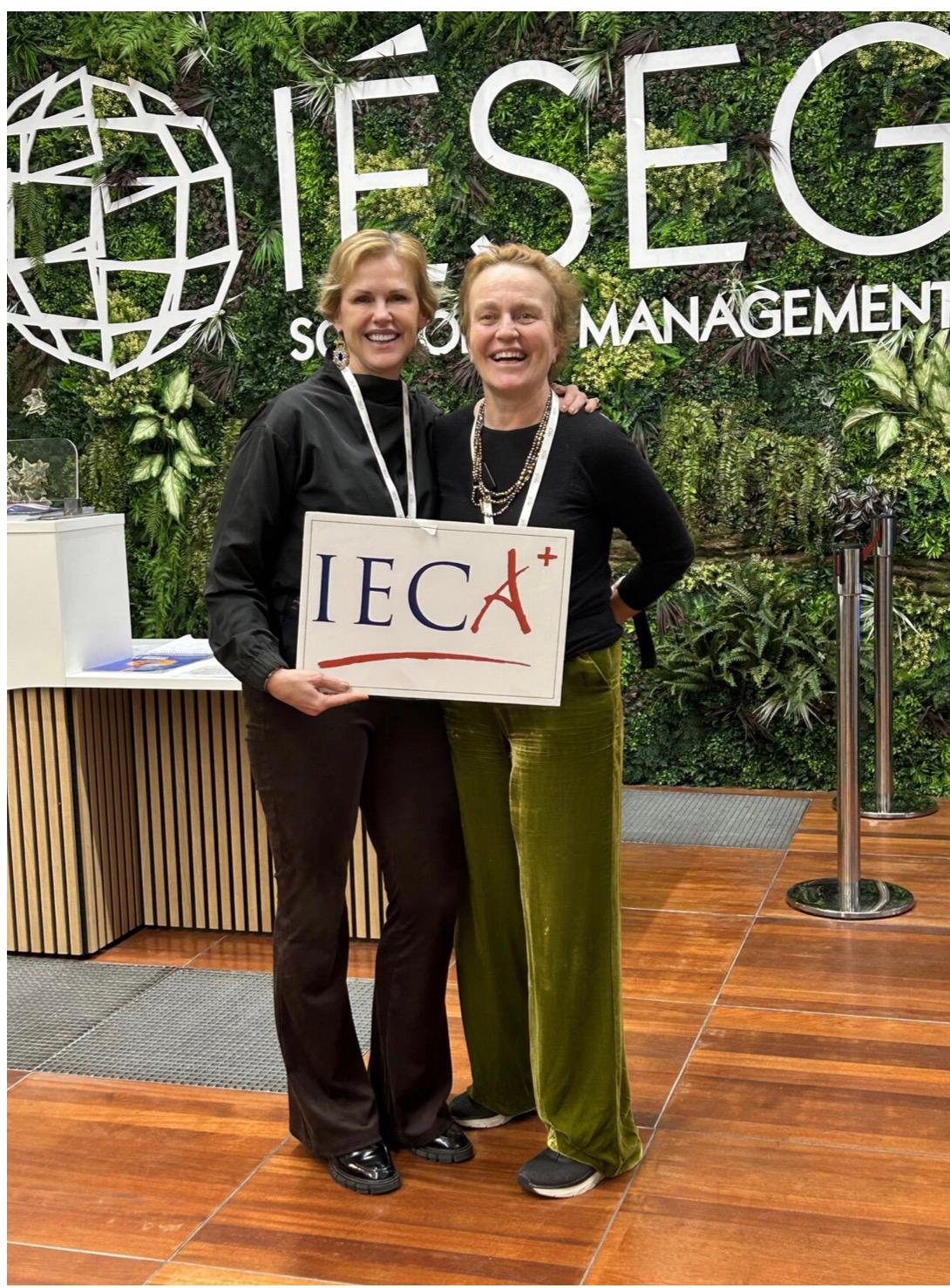
When I unpacked my suitcase upon my return from Paris, I realized that the heaviest luggage was not the one filled with notes and university brochures, but the one loaded with reflections, perspectives, and new awareness. As I told you in my previous article about the reasons for my departure, I had embarked on this journey to the IECA Symposium with a very specific set of questions in my mind. They are the same questions I hear every day in my practice: how will my son find his place in a world dominated by artificial intelligence? Or does it still make sense to make sacrifices for an international education when technology seems to be able to shorten every distance and automate every skill? Today, after two days of intense discussions, panels...

Summary When I talk to students and families about studying abroad, one question always comes up: how are school, university, and work changing in the age of artificial intelligence? By 2026, this question had become so central that I decided to contribute to defining the scientific program of the IECA European Regional Symposium in Paris, dedicated to the "Future Learner". In this article, I take you behind the scenes of these two days: why I chose to be there, who the Future Learner really is, and how AI can be an ally in study abroad choices. Not a technical report, but a compass to guide you. Why a symposium on the “Future Learner” (and why now) I clearly remember the moment I decided that the Tema of the Future Learner was not...

Summary Every orientation journey is unique, made up of enthusiasms and second thoughts, fears to be faced and unexpected discoveries. In this article I tell the story of F., a student with an artistic soul who, through a months-long investigation, found her way into psychology in Berlin. A journey that involved not only her, but also her parents, who were called upon to transform anxiety into confidence. F.'s is just one of the many stories I accompany: each student has his or her own path, their own fears, their own revelations. But some dynamics are repeated, and sharing them can be helpful to those who are beginning this journey. When the creative soul meets psychology: a path of orientation through doubts, emotions and choices...

Summary As we prepare to close the doors on 2025, it is the perfect time to look ahead with renewed energy. The new year brings with it new academic programs, new competitions, and new challenges to embrace. In this end-of-year article, we take stock of what it really means to set yourself up for success in 2026-not only with up-to-date information on the best international university pathways, but with the same drive and dedication that has accompanied us so far. There is something symbolic about closing out a year. It is like turning the last page of an important chapter, with the knowledge that the next one is yet to be written. 2025 has been a busy year for so many families I have accompanied. We have explored...

Summary When a family decides to consider an international academic pathway, the question about financial investment and future return is inevitable and necessary. However, limiting the analysis to the first salary or the immediate prestige of the degree risks being a myopic view. In this in-depth analysis, we look at how the out-of-country study experience radically affects career prospects in the medium and long term. It is not just about enriching the resume, but about building a future-proof professionalism. We will see how change management, cultural adaptability and acquired method are the real keys to accessing the most ambitious professional opportunities in an ever-changing job market. The legitimate investment doubt: is it worth it? In my...

Summary A journey into the heart of German academic excellence, from Munich to Berlin via Karlsruhe. This is not just a college tour diary, but a true immersion into the future of higher education. In this article, we take you with us to discover three cities and their universities, each with a unique soul: Munich'D pulsating innovation, Karlsruhe'D research depth, and Berlin'D creative energy. A path designed for those who need to choose a university in Germany and are looking for a guide that goes beyond brochures, based on direct Experience and a deep understanding of what each campus can offer. Our journey for you: a tour to choose a university in Germany 1. Our mission: to be...

Summary This article offers a comprehensive guide for students beginning a study abroad journey, emphasizing how building connections is critical to a successful experience. The text takes students through the different stages of their journey, starting with the steps to take before departure, such as using university social media and actively participating in orientation for initial integration. Once at the destination, the article provides concrete tactics for creating a social network, suggesting keeping the dorm door open, forming study groups and joining student clubs. Academically, the guide explains how to navigate the new system, interacting with professors, taking advantage of campus resources, and adapting to a...

Summary As an educational counselor, I emphasize the importance of using break times to find your best university fit through self-reflection, active research, and planning strategies. The Articolo explores practical guidance methods: from creating a "passion journal" to campus visits, from building an academic profile to the supportive role of parents. The goal is to guide students towards a conscious choice that goes beyond prestige, prioritizing alignment with their personal and professional aspirations. As an educational counselor specializing in guiding students toward university paths abroad, I observe the transformative potential of break times each year to identify their best academic fit. Although Agosto is drawing to a close, this period can still represent a valuable opportunity...

Every time I prepare a young person for his or her first departure, I find myself reliving the same question: what does it mean, today, to leave home to study across borders? In this post I gather some reflections born from the last chapter of my book and from my daily experience as an educational counselor: an integrated look at the emotions, practical challenges and potential of a path that, despite the uncertainties of the present, remains an extraordinary resource for young people and their families. Studying abroad in the age of global uncertainties Does studying abroad require courage? Certainly, it can be a challenge for kids and families, especially at a time in history fraught with questions for the younger generation. Yet it remains a unique opportunity. A choice of presence, not escape When I started...

In my work as an educational counselor, I dedicate myself with passion and deep responsibility to accompanying students on their college choice journey, visiting universities very often. It is not just a professional task, but a real mission: to help them navigate one of the most significant and transformative moments of their lives. This is an exciting journey, but a delicate one at the same time, as it involves guiding them not only to find their academic path, but to discover their most authentic passions, their hidden talents, and to envision how to turn this into a future full of possibilities, fulfillment and success. I firmly believe that the choice of college is a crucial moment in the life of a...


An international approach is fundamental to successfully face the challenges of the future. (more…)